Rajasthani Jewellery Traditions — Borla, Hasli, Bangri & Royal Heritage (2026)
Key Takeaways — Rajasthani Jewellery at a Glance
- Rajasthani jewellery is a living heritage spanning over 500 years, rooted in Rajput royal courts and Mughal artistic fusion.
- Signature pieces include the borla, aad, timaniya, hasli, bajuband, bangri, rakhdi, and bichiya.
- Iconic techniques — thewa, kundan, meenakari, and lac — carry GI tag recognition.
- Modern styling makes these ornaments versatile for weddings, festivals, and everyday wear.
- Shop curated pieces at Glamaya.com — India’s trusted oxidised and fashion jewellery store.
What Is Rajasthani Jewellery?
Rajasthani jewellery refers to the traditional ornaments that originate from the princely state of Rajasthan in western India. These pieces carry centuries of royal heritage, tribal artistry, and cultural symbolism that make them instantly recognisable. From the intricate borla worn on the forehead to the delicate bichiya adorning the toes, every ornament tells a story of dynasty, devotion, and desert craftsmanship.
In addition, these ornaments stand apart because of their bold silhouettes, vibrant enamel work, and use of semi-precious stones alongside gold and silver. Consequently, they serve not just as adornment but as markers of marital status, community identity, and social standing. Furthermore, artisans in Jaipur, Jodhpur, and Udaipur continue to craft these designs using techniques passed down through generations.
Whether you are a bride searching for a complete shringar set or a fashion enthusiast looking for statement pieces, rajasthani jewellery offers something extraordinary. Moreover, the growing popularity of oxidised and silver-toned reproductions means you can enjoy this heritage without a royal budget. Browse stunning necklaces inspired by these traditions at Glamaya.
What Is the History and Royal Heritage Behind Rajasthani Jewellery?
The history of rajasthani jewellery stretches back to the Rajput kingdoms of the 15th and 16th centuries, when warrior clans ruled the Aravalli region. Each clan — Sisodia, Rathore, Kachhwaha, and Chauhan — developed distinct ornament styles that reflected their dynasty’s wealth and artistic patronage. As a result, Rajasthan became the jewellery capital of medieval India.
During the Mughal era (1526–1857), a remarkable fusion took place. Rajput artisans blended their bold geometric designs with the delicate floral motifs favoured by Mughal courts. Consequently, techniques like kundan setting and meenakari enamel work reached their peak under this cultural exchange. Emperor Akbar’s alliance with Rajput kings through marriage further accelerated this artistic cross-pollination.
Three cities emerged as the primary centres of this craft tradition:
- Jaipur — Known as the kundan and meenakari capital. The Gem Palace, established in 1852, remains a living museum. Additionally, Jaipur’s Johari Bazaar has been a trading hub since the 18th century.
- Jodhpur — Famous for lac ornaments and bold silver pieces. The Mehrangarh Fort’s museum showcases royal items from the Rathore dynasty dating back to the 1400s.
- Udaipur — Celebrated for refined gold work and bridal sets. The Mewar dynasty’s patronage created some of the most elaborate suites in history.
Furthermore, the Rajputana courts maintained dedicated workshops called karkhanas. These royal ateliers employed master craftsmen who specialised in specific techniques. Therefore, the diversity you see in rajasthani jewellery today is a direct legacy of this structured artistic ecosystem. For a deeper historical perspective, refer to the Wikipedia article on Indian jewellery traditions.
What Are the Essential Pieces of Rajasthani Jewellery?
This tradition encompasses a complete head-to-toe adornment system. Each piece holds cultural significance and occupies a specific place in the bridal or festive ensemble. Below, we explore every essential ornament in detail.
What Is a Borla (Maang Tikka) in Rajasthani Tradition?
The borla is the crown jewel of rajasthani jewellery for the forehead. Unlike a standard maang tikka, it features a distinctive spherical or dome-shaped pendant that rests on the centre parting of the hair. Traditionally, Rajput brides wear the borla in gold with uncut diamonds (polki) and red enamel on the reverse side.
Moreover, the borla symbolises the third eye and is considered auspicious for married women. In Marwari and Rajput communities, wearing it signifies that a woman’s husband is alive. Consequently, this ornament holds deep emotional and spiritual value beyond its decorative function. Explore beautiful maang tikka designs at Glamaya that capture this aesthetic.
What Are Aad and Timaniya Necklaces?
The aad is a flat, broad choker-style necklace that sits snugly around the neck. This iconic piece typically features a square or rectangular centrepiece flanked by panels, all connected with flexible links. Rajput queens wore the aad in gold with kundan work and emeralds.
Similarly, the timaniya is a three-stringed necklace that cascades below the aad. Together, these two pieces create the signature layered look of rajasthani jewellery. Additionally, the timaniya often features cubic or barrel-shaped gold beads interspersed with gemstones. Browse our choker collection for aad-inspired designs.
-
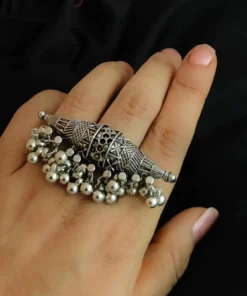
 Ethnic Oxidised Adjustable Finger Ring - Unique Designs For Women
Original price was: ₹1,799.00.₹349.00Current price is: ₹349.00.
Ethnic Oxidised Adjustable Finger Ring - Unique Designs For Women
Original price was: ₹1,799.00.₹349.00Current price is: ₹349.00. -
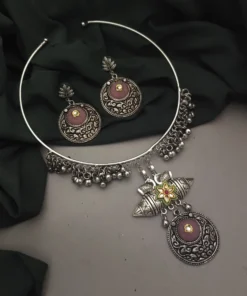
0xidised Two Tone Temple Necklace Earrings Set
Original price was: ₹2,149.00.₹749.00Current price is: ₹749.00.
-
Pink Ethnic Hasli Necklace & Earring Set - Traditional Indian Style
Original price was: ₹2,349.00.₹749.00Current price is: ₹749.00.
-
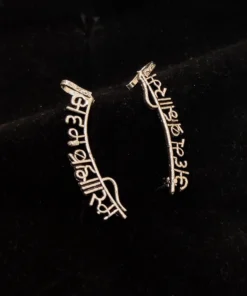
Aham Brahmasmi Oxidised Cute Earcuffs
Original price was: ₹1,799.00.₹349.00Current price is: ₹349.00.
What Is a Hasli Necklace in Rajasthani Jewellery?
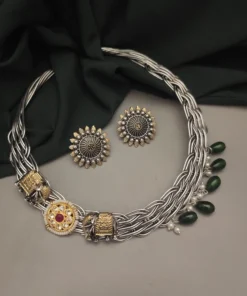
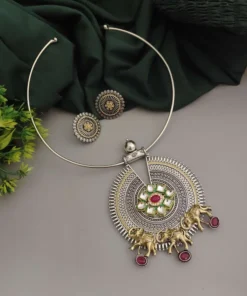
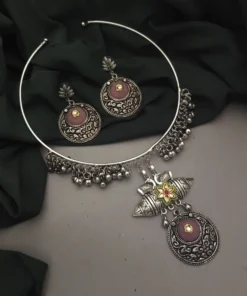
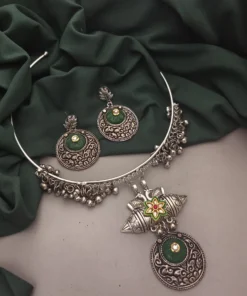
The hasli is a rigid, torque-style neckpiece that forms an essential part of this tradition. Unlike the flexible aad, the hasli is a solid circular band — often crafted in silver or gold — that clasps firmly around the neck. Historically, both men and women in Rajasthan wore it as a symbol of status and clan identity.
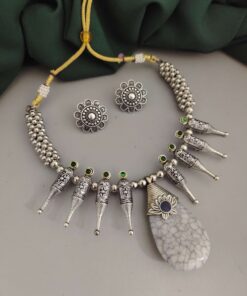
In modern fashion, the hasli has experienced a remarkable revival. Oxidised silver hasli designs, in particular, have become wildly popular among young women who appreciate bold, statement-making ornaments. Furthermore, the simplicity of the hasli makes it perfect for both traditional and Indo-Western outfits. Discover trending hasli necklaces at Glamaya.
-
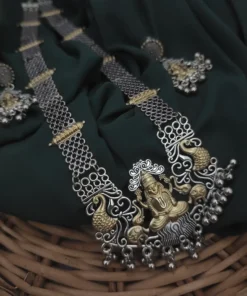
Elegant Hasli Choker Necklace Set with Elephant Design
Original price was: ₹2,899.00.₹799.00Current price is: ₹799.00.
-
Elegant Premium Stone Hasli Necklace & Earring Set
Original price was: ₹2,149.00.₹749.00Current price is: ₹749.00.
-
Stylish Oxidised Fusion Hasli Set: Trendy Necklace Earrings Combo
Original price was: ₹2,899.00.₹749.00Current price is: ₹749.00.
-
Aashvi Trendy 2-tone Oxidised Hasli Set
Original price was: ₹2,899.00.₹749.00Current price is: ₹749.00.

What Is a Bajuband (Armlet) in Rajasthani Tradition?
The bajuband, also called the vanki or armlet, wraps around the upper arm. This striking ornament traditionally features a V-shaped or broad-band design adorned with kundan, meenakari, or polki work. Rajput warriors wore bajubands as symbols of valour, while women wore them as bridal pieces.
Additionally, the bajuband accentuates the arm beautifully when paired with short-sleeved blouses or choli designs. As a result, contemporary designers frequently incorporate bajuband-inspired elements into modern collections. Shop elegant bangles, bracelets, and armlets that echo this heritage.
What Are Bangri and Kada Bangles?
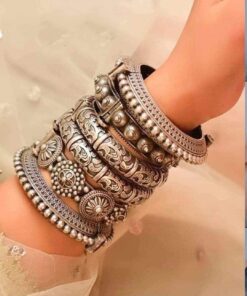
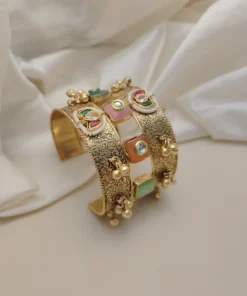
Bangri refers to the traditional Rajasthani bangles — typically broad, ornate, and crafted with lac, gold, or silver. These pieces often feature intricate patterns of meenakari, stone setting, or filigree work. In Rajasthani culture, married women traditionally wear bangri in odd numbers on each wrist.
The kada, on the other hand, is a thicker, more rigid bangle. Rajasthani kadas often come in pairs and feature bold motifs of elephants, peacocks, or floral patterns. Moreover, oxidised silver kadas have become a fashion staple, blending heritage traditions with contemporary styling. Find stunning kada designs at Glamaya.
What Are Haathphool, Payal, Rakhdi, and Bichiya?
Beyond the primary ornaments, this tradition includes several smaller yet equally significant pieces:
- Haathphool — A hand harness connecting a bracelet to rings via chains. This elaborate piece covers the back of the hand and is essential for Rajasthani bridal adornment.
- Payal (Anklets) — Heavy silver anklets with ghungroo (bells) that produce a melodic sound. Rajasthani payals tend to be broader and more ornate than those from other regions.
- Rakhdi — A smaller, more delicate version of the borla. The rakhdi sits on the forehead and is worn daily by married Rajput women, distinguishing everyday wear from bridal pieces.
- Bichiya (Toe Rings) — Silver toe rings worn by married women. In Rajasthani tradition, the bichiya is placed during the wedding ceremony and is never removed. Explore our rings collection for traditional designs.
Additionally, the nath (nose ring) holds immense importance. Rajasthani naths are typically large, circular, and adorned with pearls or stones — often connected to the ear by a chain. As a result, the nath is one of the most photographed ornaments at weddings.
What Does Rajasthani Bridal Jewellery Include?
A complete Rajasthani bridal set — known as the solah shringar (sixteen adornments) — represents the most elaborate expression of rajasthani jewellery traditions. The bride adorns herself from head to toe, and each piece carries specific auspicious meaning.
Here is the complete bridal ensemble:
- Borla or Rakhdi — Forehead ornament marking the bride’s new status.
- Sheeshphool — Hair ornament with chains draped over the parting.
- Jhumkas — Dome-shaped earrings, often with pearl drops. Shop jhumka earrings at Glamaya.
- Nath — Large nose ring connected to the ear via chain.
- Aad — Broad choker necklace sitting close to the throat.
- Timaniya — Three-stringed necklace layered below the aad.
- Rani Haar — Long necklace reaching the waist.
- Bajuband — Upper arm ornament on both arms.
- Bangri / Chuda — Sets of bangles covering the forearms.
- Haathphool — Hand harness with ring attachments.
- Kamarband — Ornamental waist belt worn over the lehenga.
- Payal — Heavy anklets with bells.
- Bichiya — Silver toe rings placed during the ceremony.
Consequently, a Rajasthani bride wears between 15 and 20 individual ornaments, making it one of the most jewellery-intensive bridal traditions in India. Moreover, the combined weight of a traditional gold bridal set can exceed 800 grams — a testament to the opulence of this heritage.
-
Chic Silver Armlet Combo Set - Trendy 6 Pc Bangles For Women
Original price was: ₹14,349.00.₹2,699.00Current price is: ₹2,699.00.
-
Ziana Semi Precious Stones Adjustable Bracelet Kada
Original price was: ₹6,249.00.₹1,699.00Current price is: ₹1,699.00.
-
Tanisha Oxidized Silver Replica Dual Tone Bangles Stack
Original price was: ₹7,999.00.₹2,699.00Current price is: ₹2,699.00.
-
Stylish Two Tone Bangles Set: Silver Replica Armlets Combo
Original price was: ₹14,349.00.₹2,699.00Current price is: ₹2,699.00.


How Does Rajasthani Jewellery Compare to Maharashtrian and South Indian Styles?
Rajasthani jewellery has a distinct visual language that sets it apart from other major Indian adornment traditions. The following comparison table highlights the key differences across three iconic regional styles.
| Feature | Rajasthani | Maharashtrian | South Indian |
|---|---|---|---|
| Primary Metal | Gold, silver, lac | Gold (22K preferred) | Gold (22K temple gold) |
| Signature Technique | Kundan, meenakari, thewa | Kolhapuri filigree, rava work | Temple work, antique finish |
| Forehead Piece | Borla / Rakhdi | Bindiya / Chandrakor | Nethi Chutti |
| Iconic Necklace | Aad, timaniya, hasli | Thushi, kolhapuri saaj | Manga malai, kasu mala |
| Colour Palette | Vibrant enamel (red, green, blue) | Gold-dominant, minimal colour | Gold with rubies, emeralds |
| Cultural Influence | Rajput + Mughal fusion | Peshwa and Maratha courts | Chola and Vijayanagara temples |
| Bridal Weight | 500–800+ grams | 300–500 grams | 500–1000+ grams |
As this table demonstrates, rajasthani jewellery uniquely blends Rajput warrior aesthetics with Mughal refinement. In contrast, Maharashtrian pieces favour understated gold work, while South Indian ornaments lean heavily on temple motifs. Therefore, each tradition reflects its region’s distinct cultural DNA.
Interestingly, cross-regional influences have grown in recent years. Brides in Maharashtra and South India now frequently incorporate hasli and aad designs into their trousseau. Similarly, Rajasthani brides occasionally add temple-style elements to their ensembles, creating a pan-Indian fusion aesthetic that honours multiple traditions simultaneously.
What Materials and Craftsmanship Define Rajasthani Jewellery?
The artistry behind these ornaments relies on four signature techniques, each with a distinct origin city and centuries-old lineage. Understanding these methods helps you appreciate the true value of authentic pieces.
What Is Thewa Craft in Rajasthani Jewellery?
Thewa is a 400-year-old art form that involves fusing intricately worked gold sheets onto coloured glass. This technique originated in Pratapgarh, Rajasthan, and remains exclusive to the Raj Soni family of goldsmiths. In 2018, thewa received a Geographical Indication (GI) tag, cementing its status as a protected craft. Consequently, authentic thewa pieces command premium prices due to the painstaking process that requires 15–20 days per ornament.
How Is Kundan Setting Used in This Tradition?
Kundan refers to the technique of setting gemstones in gold using a refined form of lac as the adhesive base. Jaipur has been the kundan capital since the Mughal era. Moreover, each kundan piece passes through the hands of multiple artisans — the ghaat maker creates the frame, the paadh specialist sets stones, and the meenakaar applies enamel on the reverse. As a result, a single kundan necklace can take 3–6 weeks to complete.
-
Pink Kundan Hasli Necklace Earring Set: Stylish Wedding & Party Wear
₹2,899.00
-
Green Oxidized Kundan Hasli Set - Traditional Women's Jewelry
Original price was: ₹2,899.00.₹749.00Current price is: ₹749.00.
-
Exquisite Oxidised Kundan Necklace Set
Original price was: ₹2,899.00.₹749.00Current price is: ₹749.00.
-
Exquisite Kundan Choker Earring Set: Traditional Elegance
Original price was: ₹2,149.00.₹499.00Current price is: ₹499.00.
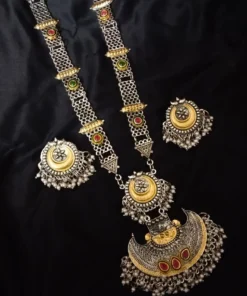

What Is Meenakari Enamel Work?
Meenakari is the art of applying coloured enamel to metal surfaces — typically the reverse of kundan pieces. This dual-sided decoration is a hallmark of rajasthani jewellery. Furthermore, artisans use natural mineral pigments to create the signature red (from gold), green (from copper), blue (from cobalt), and white (from tin) colours. Jaipur’s meenakari tradition dates back to Raja Man Singh I, who brought Lahore artisans to his court in the 16th century.
What Is Lac Jewellery from Rajasthan?
Lac is a natural resin used as a base material for affordable ornaments, particularly bangles and lightweight pieces. Jodhpur and Jaipur are the primary centres for lac production. Additionally, lac bangles often incorporate mirrors, beads, and semi-precious stones. In fact, lac bangri sets form a mandatory part of the Rajasthani bridal trousseau, making this craft both culturally significant and commercially vital.
How Should You Style Rajasthani Jewellery for Weddings?
Styling these ornaments for weddings requires understanding the layering principles that define the Rajasthani bridal look. Here are expert tips to achieve an authentic yet comfortable ensemble.
First, begin with the base layer — the aad or hasli — and build upward. Layer the timaniya below the aad, and add a rani haar for the third tier. This graduated approach prevents the necklaces from tangling or creating visual clutter.
Second, balance heavy neckpieces with proportionate earrings. If you choose statement jhumkas, opt for a simpler borla. Conversely, an elaborate borla with sheeshphool pairs best with medium-sized earrings. This principle ensures your ornaments draw attention to your face without overwhelming your features.
Third, consider the colour of your lehenga. Red and maroon outfits pair beautifully with gold and kundan pieces. Meanwhile, pastel and blush-toned lehengas look stunning with polki or rose-gold-toned ornaments. Furthermore, royal blue and emerald green outfits complement meenakari pieces with contrasting enamel work.
Finally, ensure comfort by testing the weight of your complete set before the wedding day. Many brides now choose lightweight oxidised reproductions for the reception while reserving heavier traditional rajasthani jewellery for the main ceremony.
How Can You Style Rajasthani Jewellery for Modern Occasions?
These ornaments transition beautifully from traditional events to contemporary settings when styled thoughtfully. Here are practical ideas for everyday and semi-formal wear.
To start, pair a single oxidised hasli with a solid-colour kurta or even a Western blouse. The hasli’s clean lines make it a versatile statement piece for office wear, brunches, and evening outings. In fact, this minimalist approach is the fastest-growing trend among urban Indian women.
Similarly, silver jhumkas or small borla-inspired maang tikkas work beautifully with Indo-Western outfits. Try wearing a delicate rakhdi-style tikka with a draped saree for a fusion look. Moreover, stacking multiple thin bangri-style oxidised bangles creates a boho-chic effect that complements denim and casual dresses.
For festive occasions like Diwali or Karwa Chauth, consider a mid-weight kundan choker with matching earrings. This pared-down approach delivers maximum impact without the full bridal weight. Furthermore, mixing metals — such as pairing a gold-toned necklace with oxidised silver earrings — adds a modern edge to traditional designs.
-
Elegant Hasli Choker Necklace Set with Elephant Design
Original price was: ₹2,899.00.₹799.00Current price is: ₹799.00.
-
Elegant Premium Stone Hasli Necklace & Earring Set
Original price was: ₹2,149.00.₹749.00Current price is: ₹749.00.
-
Stylish Oxidised Fusion Hasli Set: Trendy Necklace Earrings Combo
Original price was: ₹2,899.00.₹749.00Current price is: ₹749.00.
-
Aashvi Trendy 2-tone Oxidised Hasli Set
Original price was: ₹2,899.00.₹749.00Current price is: ₹749.00.
Which Rajasthani Jewellery Crafts Have GI Tags?
Geographical Indication (GI) tags protect traditional crafts by certifying their regional origin and authenticity. Several techniques used in this tradition have received prestigious recognition from the Government of India.
- Thewa from Pratapgarh — GI registered in 2018. Only artisans in Pratapgarh district can legally produce and sell certified thewa pieces. The craft employs a 23-karat gold sheet fused onto coloured glass through a process involving 32 separate steps.
- Kundan from Jaipur — While kundan lacks a standalone GI tag, Jaipur’s overall gem-cutting and jewellery-making tradition is recognised. The Jaipur Jewellery Show, held annually since 2004, is Asia’s largest B2B jewellery event and showcases kundan work prominently.
- Lac Bangles from Jodhpur — Lac work from Rajasthan is recognised as a traditional craft under the Handicrafts Board. The Jodhpur lac bazaar near Sardar Market remains the largest wholesale market for lac ornaments in India.
For official information on GI-tagged crafts, visit the Geographical Indications Registry of India. These protections help preserve the authenticity of rajasthani jewellery and ensure that master artisans receive fair recognition for their skills.
How Should You Care for and Preserve Rajasthani Jewellery?
Proper care extends the life of your ornaments significantly. Different materials require specific maintenance approaches, so follow these guidelines based on your piece’s composition.
For kundan and meenakari pieces, store them in soft cotton pouches away from moisture. Never spray perfume directly onto kundan ornaments — the chemicals can loosen the lac adhesive holding the stones. Additionally, wipe meenakari surfaces gently with a dry microfibre cloth after each wear.
For oxidised silver pieces, avoid contact with water and chemicals. If tarnish occurs, rub gently with a silver-polishing cloth. However, do not over-polish — the oxidised finish is intentional and gives these ornaments their distinctive aged character. Furthermore, store oxidised pieces in airtight zip-lock bags with silica gel sachets to slow oxidation.
For lac and thewa pieces, handle with extra care as these materials are heat-sensitive. Keep lac bangri away from direct sunlight and hot surfaces. Similarly, thewa ornaments should never be exposed to ultrasonic cleaners, as the vibrations can crack the glass base. Instead, clean thewa pieces with a barely damp cotton swab.
General preservation tips for all your pieces include:
- Remove ornaments before bathing, swimming, or exercising.
- Apply makeup, perfume, and hairspray before wearing your pieces.
- Store each item separately to prevent scratching.
- Get professional cleaning and re-tightening of stones annually for high-value pieces.
- Insure valuable antique items and maintain photographs for documentation.
Where Can You Buy Authentic Rajasthani Jewellery?
Finding genuine pieces requires knowing the right sources. Here are the best options for purchasing both traditional and contemporary ornaments.
For affordable, fashion-forward rajasthani jewellery, Glamaya.com offers a curated collection of oxidised, silver-toned, and kundan-inspired pieces. The store specialises in everyday and festive ornaments at accessible price points. Moreover, Glamaya ships across India with easy returns and secure packaging.
For high-end traditional purchases, visit the physical markets in Rajasthan:
- Johari Bazaar, Jaipur — The oldest and most famous market for kundan and meenakari pieces.
- Sardar Market, Jodhpur — Best for lac bangles, silver hasli designs, and oxidised ornaments.
- Hathi Pol Bazaar, Udaipur — Known for silver pieces and tribal designs at competitive prices.
When buying online, always check for clear product photographs, material descriptions, and return policies. Furthermore, authentic sellers provide hallmarking for gold pieces and purity stamps for silver items. Consequently, shopping from trusted platforms like Glamaya ensures quality assurance alongside traditional design authenticity.
One important tip: always request a certificate of authenticity for high-value purchases, especially for thewa and antique kundan pieces. Many reputable Jaipur dealers now offer digital certificates with photographs and material specifications. This documentation protects your investment and simplifies insurance claims if needed. In the same way, Glamaya provides detailed product descriptions and material information for every item in their rajasthani jewellery collection, giving buyers complete transparency before purchase.
Frequently Asked Questions About Rajasthani Jewellery
What is the most famous type of rajasthani jewellery?
The most famous type is the kundan set from Jaipur, featuring uncut gemstones set in gold with meenakari enamel work on the reverse. The aad (choker) and borla (forehead ornament) are the most recognised individual pieces worldwide.
What is the difference between a borla and a maang tikka?
A borla is a spherical or dome-shaped pendant specific to Rajasthani tradition, while a maang tikka has a flat pendant design common across North India. The borla is considered more elaborate and is typically reserved for brides and married women.
How much does a traditional rajasthani jewellery bridal set cost?
A traditional gold bridal set costs between ₹3,00,000 and ₹15,00,000 or more, depending on gold weight and gemstone quality. However, oxidised and fashion sets at stores like Glamaya range from ₹2,000 to ₹15,000 for complete ensembles.
Is this tradition only followed by Rajput women?
No, rajasthani jewellery is worn across all communities in the state and increasingly throughout India. While certain pieces like the borla and aad have Rajput origins, modern designs appeal to women of all backgrounds for weddings and festivals.
What is thewa work?
Thewa is a traditional art of fusing 23-karat gold sheets onto coloured glass, creating intricate scenes of Rajasthani life. This 400-year-old craft originates from Pratapgarh and holds a GI tag. These ornaments are among the most prized collectible forms of Indian artisan craft.
Can you wear these ornaments with Western outfits?
Yes, many pieces — especially oxidised hasli necklaces, silver jhumkas, and stackable bangri — pair beautifully with Western outfits. Choose one statement piece and keep the rest of your accessories minimal for a balanced look.
How do you identify genuine kundan pieces?
Genuine kundan items have meenakari work on the reverse side, use lac (not glue) to set stones, and feel heavier than imitations. Additionally, authentic pieces from Jaipur have slightly irregular stone edges — perfect uniformity usually indicates machine-made replicas.
What is the significance of the aad necklace?
The aad is a broad, flat choker that serves as the primary neckpiece in rajasthani jewellery. Historically, it signified royal status and clan identity in Rajput courts. Today, brides still build their complete layering around this foundation piece.
How should you store these ornaments to prevent damage?
Store each piece separately in soft cotton or velvet pouches. Keep items away from moisture, perfume, and direct sunlight. For oxidised pieces, use airtight bags with silica gel. For kundan ornaments, avoid stacking to prevent stone displacement.
Where can you buy affordable rajasthani jewellery online in India?
You can buy affordable pieces online at Glamaya.com, which offers oxidised, kundan-inspired, and silver-toned ornaments with pan-India delivery. The store specialises in fashion designs that capture traditional Rajasthani aesthetics at accessible prices.