What Does Choker Mean? History, Types & Complete Styling Guide (2026)
- The choker meaning extends far beyond a simple necklace — it carries over 5,000 years of cultural symbolism across civilisations.
- From Sumerian royalty (2500 BCE) to Victorian high society and the 90s grunge revival, chokers have reinvented themselves in every era.
- Types include velvet, metal, pearl, beaded, oxidised, kundan, hasli, tattoo, and pendant chokers — each with a distinct aesthetic.
- In Indian culture, the choker (known as hasli, thushi, or attigai) holds bridal and traditional significance across regions.
- Glamaya offers 100+ choker designs in oxidised, kundan, pearl, and trending styles at budget-friendly prices.
What does choker meaning truly encompass? Far more than just a close-fitting necklace, the choker has served as a symbol of power, rebellion, protection, and beauty across 5,000 years of human history. From Sumerian queens to Victorian aristocrats to 90s grunge icons, the choker has reinvented itself in every era while maintaining its signature snug fit around the neck. In Hindi, the question “choker ka matlab” (चोकर का मतलब) often arises among fashion enthusiasts exploring this timeless accessory. This 2026 guide covers the complete choker meaning — history, types, styling tips, and cultural significance in India.
What Does Choker Mean? — Definition and Etymology
The choker meaning, in its simplest form, refers to a necklace that fits closely around the neck. The word “choker” derives from the English verb “to choke,” referencing the snug placement of the necklace at the throat. Typically, a choker sits at 14–16 inches (35–40 cm) in circumference, resting on the base of the neck above the collarbone.
Furthermore, the choker meaning in Hindi (choker ka matlab / चोकर का मतलब) translates to “गले से चिपकने वाला हार” — a necklace that clings to the throat. In different Indian languages, the concept has regional names: “thushi” in Marathi, “attigai” in Tamil, “hasli” in Hindi/Punjabi, and “addigai” in Telugu. Each carries the same core meaning — a neck-hugging ornament.
Moreover, the choker meaning extends beyond its physical description. According to Wikipedia’s article on chokers, this accessory has symbolised everything from royal status and protection to rebellion and fashion-forward thinking, depending on the era and culture. Consequently, understanding choker meaning requires exploring its rich history.
Choker Meaning Through History — 5,000 Years of Evolution
The history behind the choker meaning spans multiple civilisations and continents. Below is a journey through the key eras that shaped this iconic accessory.
Sumerians and Ancient Egypt (2500–1500 BCE)
The earliest evidence of choker-style necklaces dates to the Sumerian civilisation around 2500 BCE in modern-day Iraq. Sumerian women wore gold chokers as symbols of wealth and divine protection. Similarly, ancient Egyptian royalty — including Queen Nefertiti — wore wide, beaded chokers called “usekh” collars that covered the entire neck and upper chest.
Furthermore, these ancient chokers served dual purposes: adornment and spiritual protection. The Egyptians believed that a choker guarded the throat (a vulnerable body point) against evil spirits. In fact, this protective choker meaning persisted across cultures for millennia.
Mughal India and Pre-Colonial Traditions (1500–1800 CE)
In India, the choker meaning connects deeply to Mughal and pre-colonial jewellery traditions. The hasli (a rigid, horseshoe-shaped metal choker) was worn by Mughal royalty and Rajput queens. Additionally, South Indian attigai chokers featuring temple motifs were crafted for both deity adornment and human wear.
Moreover, the Maratha Peshwa courts popularised the thushi — a tightly woven gold-bead choker that remains central to Maharashtrian bridal jewellery. Consequently, the choker meaning in Indian culture is inseparable from bridal tradition, temple art, and regional identity.
Victorian Era (1860–1900) — From Royal Fashion to Cultural Symbol
The Victorian era transformed the choker meaning in Western fashion. Queen Alexandra of Denmark popularised wide velvet and pearl chokers in the 1860s — reportedly to conceal a childhood scar on her neck. British high society quickly adopted the trend, and the choker became a symbol of elegance and aristocratic taste.
However, the Victorian choker meaning also carried darker associations. In some European contexts, a black velvet choker signalled that a woman worked in certain professions. As referenced by Harper’s Bazaar’s history of the choker, this dual symbolism — both elite and transgressive — gave the choker its enduring cultural complexity.
The 1990s Revival and Grunge Culture
The 1990s saw the most dramatic choker revival in modern fashion history. Tattoo chokers (stretchy plastic mesh), velvet ribbons, and leather bands became defining accessories of the grunge, goth, and pop-culture movements. Celebrities like Drew Barrymore, Gwyneth Paltrow, and the Spice Girls made chokers essential 90s fashion.
Additionally, the 90s choker meaning shifted to represent youth rebellion, individuality, and anti-establishment style. The affordable plastic tattoo choker — available for under $1 — democratised the accessory, making it accessible to every teenager. Indeed, this era cemented the choker’s identity as both a fashion staple and a cultural statement.
The 2020s Comeback — Modern Choker Meaning
In 2020–2026, the choker has experienced its strongest resurgence yet. Indian oxidised chokers, kundan chokers, and pearl chokers dominate e-commerce platforms. Furthermore, the fusion of traditional Indian designs with Western choker concepts has created entirely new categories — the oxidised hasli, the temple choker, and the tribal metal choker.
The modern choker meaning in 2026 centres on versatility and self-expression. A single oxidised choker can transform a plain kurta into a statement outfit. Explore the latest choker trends at Glamaya’s choker collection.
-
 Stylish Oxidised Choker Set: Trendy Necklace & Earrings
Original price was: ₹2,349.00.₹749.00Current price is: ₹749.00.
Stylish Oxidised Choker Set: Trendy Necklace & Earrings
Original price was: ₹2,349.00.₹749.00Current price is: ₹749.00. -
Stylish Choker Necklace & Earring Set: Trendy Combo
Original price was: ₹2,899.00.₹749.00Current price is: ₹749.00.
-
Leaf Choker Necklace Earring Set - Trendy Oxidised Style For Women
Original price was: ₹2,149.00.₹499.00Current price is: ₹499.00.
-
Tribal Choker Earring Set - Trendy & Affordable Jewelry
Original price was: ₹2,149.00.₹499.00Current price is: ₹499.00.
Types of Chokers and Their Meaning — A Complete Style Guide
Understanding different choker types helps you grasp the full choker meaning in fashion. Below are the major categories available in 2026.
Velvet Choker
The velvet choker is a soft, fabric-based necklace that sits flush against the skin. It originated in Victorian-era Europe and remains one of the most elegant choker styles. Velvet chokers come in solid colours, with pendant attachments, or embellished with embroidery. They pair beautifully with formal gowns, saree blouses, and evening wear.
Metal Choker — Oxidised and Gold-Tone
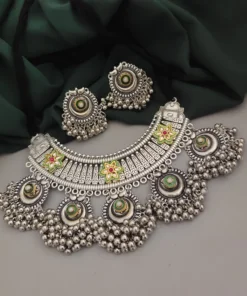
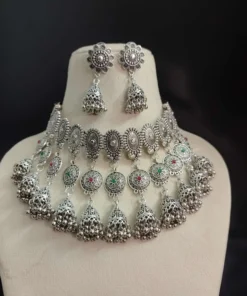
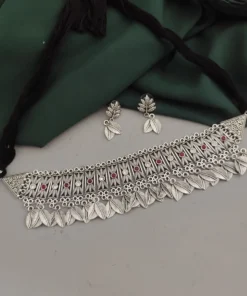
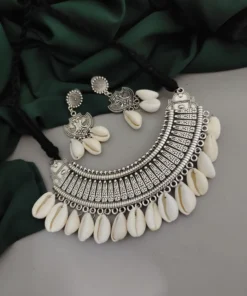
Metal chokers include rigid bands (hasli), linked chains, and sculpted designs. The oxidised metal choker is the most popular style in India, offering a rustic, tribal aesthetic at affordable prices. Gold-tone metal chokers mimic the look of traditional gold hasli designs. Browse metal chokers at Glamaya’s hasli collection.
Pearl Choker
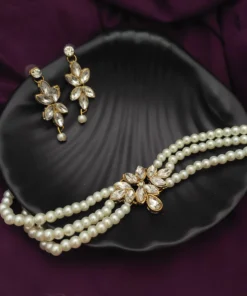
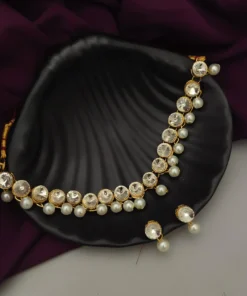
Pearl chokers carry the choker meaning of timeless sophistication. A single strand of pearls at the throat evokes Audrey Hepburn elegance. In Indian bridal fashion, multi-strand pearl chokers with gold spacers create a regal, traditional look. Pearl chokers suit every skin tone and pair with both Indian and Western outfits.
-
Stunning Pearl Choker Necklace Earrings Set
Original price was: ₹2,899.00.₹599.00Current price is: ₹599.00.
-
Elegant Kundan Pearl Choker Set
Original price was: ₹1,799.00.₹349.00Current price is: ₹349.00.
-
Exquisite Kundan Pearl Choker Set
Original price was: ₹2,349.00.₹549.00Current price is: ₹549.00.
-
Pearl Kundan Choker Necklace Earrings Set - Elegant Traditional Combo
Original price was: ₹1,799.00.₹349.00Current price is: ₹349.00.

Beaded Choker
Beaded chokers use glass, wooden, ceramic, or crystal beads strung on thread or wire. They range from tribal-minimalist (single strand of wooden beads) to elaborate multi-row festival designs. The choker meaning in tribal cultures often connects to clan identity and spiritual protection.
Oxidised Choker — India’s Favourite
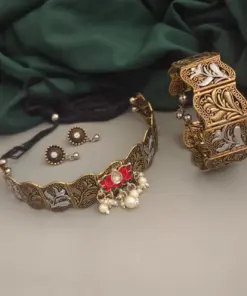
The oxidised choker has become India’s bestselling choker category in 2026. Its dark, antique-silver finish complements Indian skin tones beautifully. Designs range from simple bands to elaborate temple-motif pieces with dangling charms. Explore trending designs at Glamaya’s necklace collection.
Kundan Choker
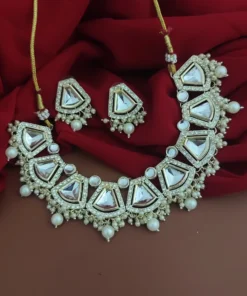
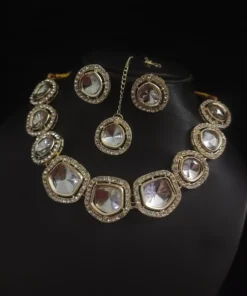
Kundan chokers feature glass or semi-precious stones set in gold-tone metal using the traditional Rajasthani technique. These pieces carry the choker meaning of bridal opulence. A heavy kundan choker paired with matching earrings creates a complete bridal look.
-
Stunning Pearl Choker Necklace Earrings Set
Original price was: ₹2,899.00.₹599.00Current price is: ₹599.00.
-
Exquisite Kundan Choker Earring Set: Traditional Elegance
Original price was: ₹2,149.00.₹499.00Current price is: ₹499.00.
-
Traditional Kundan Choker Set With Maangtikka
Original price was: ₹2,149.00.₹549.00Current price is: ₹549.00.
-
Traditional Kundan Choker Necklace Set - Elegant & Wedding-ready
Original price was: ₹2,149.00.₹499.00Current price is: ₹499.00.


Tattoo Choker
The stretchy plastic mesh tattoo choker — iconic from the 1990s — remains popular among teens and young adults. It carries the choker meaning of casual, youthful rebellion. Available in every colour, it costs under ₹50 and pairs with casual T-shirts and denim.
Pendant Choker
A pendant choker combines the close-fitting band with a central hanging pendant — a gemstone, coin, or symbol. This hybrid design merges the choker meaning with pendant necklace symbolism, creating a focal point at the throat.
Choker Meaning vs Necklace — What Is the Difference?
Understanding the choker meaning also requires distinguishing it from a regular necklace. Below is a clear comparison.
| Feature | Choker | Necklace |
|---|---|---|
| Length | 14–16 inches (sits on neck) | 16–36 inches (hangs on chest) |
| Fit | Snug, close to skin | Loose, drapes freely |
| Visual Effect | Frames the face, elongates neck | Draws attention to chest/décolleté |
| Best Necklines | Off-shoulder, V-neck, strapless | Round neck, high neck, closed necklines |
| Cultural Context | Bridal (hasli, attigai), fashion statement | Everyday wear, formal occasions |
| Layering | Base layer in multi-necklace styling | Middle or outer layer |
As this table demonstrates, the fundamental choker meaning lies in its tight, neck-level placement. This positioning creates a different visual effect than a hanging necklace — framing the face rather than decorating the chest. Many stylists recommend wearing both together (a choker as the base layer with a longer necklace below) for a layered look.
How to Choose a Choker by Neckline — Choker Meaning in Styling
The neckline of your outfit determines which choker style works best. Here is a practical guide.
For V-neck tops, blouses, and saree drapes, a simple band choker or thin hasli works best. The V-shape already draws the eye downward, so the choker adds a horizontal balance at the throat. Avoid wide, heavy chokers that compete with the neckline.
For round neck kurtis and T-shirts, a statement oxidised choker creates an attractive contrast. The round neckline acts as a clean canvas, letting the choker’s design shine. Additionally, chokers with pendant drops add vertical interest to round necklines.
For off-shoulder and strapless tops, the choker becomes the star. Choose a bold kundan or multi-layer pearl choker that fills the visual space between neck and bare shoulders. This is where the full choker meaning — as a frame for the face and décolleté — comes alive.
For saree blouses, match the choker width to the blouse neckline depth. Deep-cut blouses suit wider, heavier chokers. High-neck blouses pair better with thin, delicate chokers or skip the choker entirely. Explore saree-compatible chokers at Glamaya’s choker collection.
-
Stylish Oxidised Choker Set: Trendy Necklace & Earrings
Original price was: ₹2,349.00.₹749.00Current price is: ₹749.00.
-
Stylish Choker Necklace & Earring Set: Trendy Combo
Original price was: ₹2,899.00.₹749.00Current price is: ₹749.00.
-
Leaf Choker Necklace Earring Set - Trendy Oxidised Style For Women
Original price was: ₹2,149.00.₹499.00Current price is: ₹499.00.
-
Tribal Choker Earring Set - Trendy & Affordable Jewelry
Original price was: ₹2,149.00.₹499.00Current price is: ₹499.00.
How to Style Chokers with Indian Outfits — Choker Meaning in Ethnic Fashion
Chokers and Indian ethnic wear form one of the most natural and stunning fashion pairings. Here is how to master the combination.
With sarees, an oxidised or kundan choker replaces the need for a longer necklace. The choker frames the face beautifully against the saree pallu. For silk sarees, choose gold-tone or kundan chokers. For cotton and linen sarees, oxidised and German silver chokers create a rustic, artisan look.
With lehengas, a heavy bridal choker with matching earrings defines the entire look. Kundan or pearl chokers pair best with bridal lehengas. Furthermore, layer a choker with a longer rani haar for the traditional multi-necklace bridal aesthetic.
With kurtis and salwar suits, a single oxidised choker elevates the outfit from simple to stylish. This works for office wear, college, and casual occasions. Choose compact chokers that do not overwhelm the kurta neckline.
Moreover, explore complete choker-and-earring sets at Glamaya’s combo set collection for pre-matched pairings that take the guesswork out of styling.
Choker Meaning in Western Fashion — Styling Tips
The choker’s Western origins mean it pairs naturally with contemporary fashion. In 2026, the East-meets-West fusion of Indian chokers with western clothing is a major trend.
A black velvet choker with a little black dress creates timeless cocktail elegance. Similarly, an oxidised Indian choker with a white T-shirt and jeans delivers instant boho-chic appeal. Furthermore, a pearl choker with a blazer and trousers transforms office wear into something sophisticated.
Additionally, try layering a thin choker with a longer pendant necklace for the on-trend “necklace stack” look. The choker serves as the top layer, grounding the entire stack at the throat. This styling technique works with both casual and formal western outfits. Above all, confidence is the best accessory — wear your choker boldly.
Who Can Wear Chokers? — Face Shape and Choker Meaning
One common question about choker meaning and wearability: “Can everyone wear a choker?” The answer is yes — but different face shapes suit different choker widths.
Long or oval faces look best in wide chokers that add horizontal visual weight, creating a balanced proportion. Round faces suit thin, V-shaped, or pendant chokers that add vertical length. Heart-shaped faces work well with medium-width chokers that do not emphasise the wider forehead. Furthermore, square faces benefit from rounded, soft-edged choker designs that soften angular features.
Additionally, neck length matters. Women with longer necks can wear wide, multi-layer chokers comfortably. Those with shorter necks should choose thin, single-strand designs that do not visually shorten the neck further. Explore options at Glamaya’s stud earring collection for complementary ear accessories that balance your choker choice.
Choker Meaning in Indian Culture — Bridal and Traditional Significance
In Indian culture, the choker meaning transcends fashion — it carries bridal, religious, and social significance. The choker is one of the 16 shringar (bridal adornments) in Hindu tradition, serving as the first layer in the multi-necklace bridal ensemble.
In Maharashtra, the thushi choker symbolises a married woman’s status. In Tamil Nadu, the attigai choker is the first ornament placed on a bride during the ceremony. In Punjab, the hasli choker is gifted by the groom’s family as part of the wedding exchange.
Furthermore, temple chokers depicting Hindu deities (Lakshmi, Ganesha) carry spiritual significance — wearing them is considered auspicious. The oxidised temple choker has become a popular devotional accessory worn during puja and festivals. Consequently, the choker meaning in India bridges the gap between fashion, faith, and cultural identity.
-
MAJESTA Oxidised Choker Necklace Set
Original price was: ₹1,699.00.₹749.00Current price is: ₹749.00.
How to Care for Chokers — Preserving Choker Meaning and Beauty
Proper maintenance preserves the beauty of your choker collection. Different materials require specific care approaches.
For oxidised chokers, wipe with a dry cotton cloth after each wear. Store in zip-lock bags with silica gel to prevent tarnishing. Additionally, avoid water, perfume, and chemical contact. If the finish dulls, a light rub with baking soda paste restores the sheen.
For kundan and pearl chokers, handle carefully to prevent stone dislodging. Store each piece in a soft pouch separately. Furthermore, clean pearl chokers with a barely-damp cloth and dry immediately — never submerge pearls in water.
For velvet and fabric chokers, keep away from moisture and store flat (not hanging) to prevent stretching. Spot-clean stains with a damp cloth and allow to air-dry completely.
Moreover, check clasps and closures regularly. A broken clasp mid-event is easily preventable with periodic inspection. These simple habits extend the life of every choker in your collection.
Where to Buy Chokers Online — Discover Every Choker Meaning at Glamaya
Shopping for chokers online provides the widest selection and best value. Glamaya’s choker collection features 100+ designs in oxidised, kundan, pearl, stone-work, and trending styles. Prices start under ₹250, making statement accessories accessible to every budget.
Additionally, pair your choker with matching earrings and bangles from Glamaya for a coordinated look. Free shipping across India, easy returns, and responsive customer support make Glamaya a trusted destination for choker shopping in 2026.
Frequently Asked Questions About Choker Meaning
What does choker mean in fashion?
In fashion, choker meaning refers to a necklace that fits closely around the neck at 14–16 inches length. It sits at the base of the throat above the collarbone. Chokers come in various materials — velvet, metal, pearl, beaded, and more.
What is choker ka matlab in Hindi?
Choker ka matlab (चोकर का मतलब) in Hindi is “गले से चिपकने वाला हार” — a necklace that clings to the throat. In Indian traditions, chokers are known as hasli, thushi, or attigai depending on the region.
Are chokers still in fashion in 2026?
Absolutely. Chokers are one of the strongest accessory trends in 2026. Oxidised Indian chokers, kundan bridal chokers, and pearl chokers dominate both e-commerce and fashion magazines. The style shows no signs of fading.
What is the difference between a choker and a hasli?
A hasli is a specific type of rigid, horseshoe-shaped metal choker from Indian tradition. All haslis are chokers, but not all chokers are haslis. The hasli carries the specific cultural association of traditional Indian metalwork.
Can short-necked women wear chokers?
Yes, but choose thin, single-strand chokers that do not visually shorten the neck further. Avoid wide, multi-layer designs. A thin pendant choker or delicate chain choker works best for shorter necks.
What does wearing a black choker mean?
In modern fashion, a black choker has no specific symbolic meaning — it is simply a versatile accessory. Historically, black velvet chokers had various associations depending on the era and culture. Today, the meaning is purely aesthetic.
How tight should a choker fit?
A choker should fit snugly but comfortably — you should be able to fit one finger between the choker and your skin. Too tight causes discomfort; too loose loses the defining snug aesthetic that gives the choker its meaning.
What neckline looks best with a choker?
Off-shoulder, V-neck, and strapless necklines showcase chokers most dramatically. Round necklines also work well with statement chokers. Avoid pairing chokers with turtlenecks or very high necklines that compete for space.
What is the cultural significance of chokers in Indian weddings?
In Indian weddings, the choker is one of the 16 shringar bridal adornments. It serves as the first necklace layer in the bridal ensemble. Regional names include thushi (Marathi), attigai (Tamil), and hasli (Hindi/Punjabi).
Where can I buy affordable chokers online in India?
Glamaya.com offers 100+ choker designs starting under ₹250. The collection includes oxidised, kundan, pearl, stone-work, and trending styles with free shipping and easy returns across India.