Maharashtrian Jewellery Traditions — Kolhapuri Saaj, Nath, Bugadi & More (2026)
- Maharashtrian jewellery carries over 400 years of Peshwa and Maratha heritage, making every piece a cultural heirloom.
- Essential pieces include the kolhapuri saaj, thushi, nath, bugadi, tode, and vajratik — each with deep symbolic meaning.
- Modern styling pairs these ornaments with nauvari sarees, kurtis, and even western outfits.
- Oxidised and German silver versions offer affordable alternatives without sacrificing the traditional aesthetic.
- Glamaya offers authentic designs at budget-friendly prices with pan-India delivery.
Maharashtrian jewellery represents one of India’s most distinctive and culturally rich ornamental traditions. Rooted in the grandeur of the Maratha Empire and the elegance of Peshwa courts, this style has captivated women across Maharashtra and beyond for centuries. From the iconic kolhapuri saaj necklace to the ornate nath nose ring, every piece tells a story of heritage, devotion, and artistic mastery. In this comprehensive guide for 2026, you will discover the history, essential pieces, bridal significance, styling tips, and the best places to buy online.
What Is Maharashtrian Jewellery?
Maharashtrian jewellery is a traditional ornamental style originating from Maharashtra state in India. It encompasses a wide range of gold, silver, and oxidised metal ornaments that Marathi women wear during festivals, weddings, and daily life. Each piece carries specific cultural significance tied to Marathi customs and rituals.
Furthermore, this tradition distinguishes itself through bold geometric motifs, temple-inspired carvings, and nature-based designs such as the mango (paisley), lotus, and peacock. Unlike Kundan or Meenakari styles from Rajasthan, it relies on intricate goldwork and bead-based necklaces. Additionally, many pieces serve as markers of a married woman’s status — the mangalsutra, green glass bangles, and nath being the most recognised symbols.
In recent years, oxidised metal and German silver reproductions have gained massive popularity. These affordable alternatives allow women across India to embrace the Marathi aesthetic without hefty gold prices. Consequently, you can now find stunning replicas of kolhapuri saaj, thushi, and bugadi designs at stores like Glamaya.
History and Peshwa–Maratha Heritage of Maharashtrian Jewellery
The history of this ornamental tradition dates back to the Yadava dynasty (9th–14th century CE), with references found in sculptures at Ajanta and Ellora caves. However, it truly flourished under the Maratha Empire (1674–1818), particularly during the Peshwa era in Pune.
Peshwa rulers like Bajirao I and Nanasaheb Peshwa were patrons of art and adornment. Their courts employed master goldsmiths (sonars) who crafted elaborate ornaments for royalty. Specifically, the Peshwa queens popularised the kolhapuri saaj, nath, and tode — pieces that remain central to maharashtrian jewellery even today. According to Wikipedia, these designs drew from both South Indian temple styles and Mughal aesthetics.
Moreover, the city of Kolhapur became a major hub for craftsmanship. The Kolhapuri saaj necklace takes its name from this city. Similarly, Pune’s Tulshi Baug market has served as a traditional marketplace for Marathi ornaments for over 200 years. As a result, this tradition carries not just aesthetic value but also deep regional pride and identity.
Essential Pieces of Maharashtrian Jewellery — A Complete Guide
This tradition comprises dozens of unique ornaments, each with a specific name and cultural role. Below, you will find the most important pieces that define its rich heritage.
Kolhapuri Saaj — The Iconic Necklace
The kolhapuri saaj is the most recognisable piece of maharashtrian jewellery. This long necklace features 21 pendant-like elements arranged in a specific pattern. Traditionally, these pendants represent deities, leaves, and geometric forms. The saaj typically measures 18–24 inches and sits gracefully on the chest.
Additionally, a kolhapuri saaj serves as a mangalsutra equivalent in many families. Brides receive it during the wedding ceremony, and it symbolises marital commitment. For example, some designs include the “jav mani” (barley grain) and “panadi” (leaf) motifs that carry auspicious meanings.
-
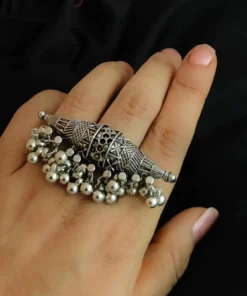
 Ethnic Oxidised Adjustable Finger Ring - Unique Designs For Women
Original price was: ₹1,799.00.₹349.00Current price is: ₹349.00.
Ethnic Oxidised Adjustable Finger Ring - Unique Designs For Women
Original price was: ₹1,799.00.₹349.00Current price is: ₹349.00. -
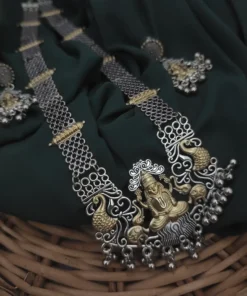
0xidised Two Tone Temple Necklace Earrings Set
Original price was: ₹2,149.00.₹749.00Current price is: ₹749.00.
-
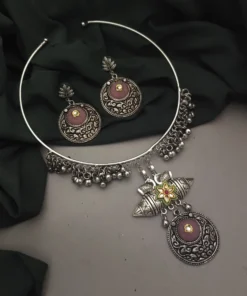
Pink Ethnic Hasli Necklace & Earring Set - Traditional Indian Style
Original price was: ₹2,349.00.₹749.00Current price is: ₹749.00.
-
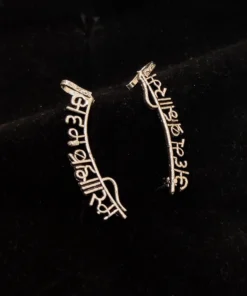
Aham Brahmasmi Oxidised Cute Earcuffs
Original price was: ₹1,799.00.₹349.00Current price is: ₹349.00.
Thushi — The Beloved Choker Necklace
Thushi is a short, tightly woven gold or bead necklace that sits snugly around the neck. It serves as one of the most popular everyday ornaments. The design consists of small gold beads woven together in a rope-like pattern, creating a textured, rich look.
Moreover, thushi pairs beautifully with both traditional nauvari sarees and modern ethnic wear. You can explore similar choker-style necklaces in Glamaya’s choker collection. Likewise, a thushi often accompanies a vajratik or chinchpeti for a layered look.
Vajratik and Chinchpeti — Mid-Length Layering Pieces
The vajratik is a diamond-shaped pendant necklace, while the chinchpeti features tamarind-seed-shaped elements. Both serve as mid-length necklaces in traditional sets. Traditionally, women wear a thushi (short), vajratik (medium), and kolhapuri saaj (long) together for a stunning layered effect.
In fact, this three-layer approach is a hallmark of Peshwa-era styling. Additionally, the chinchpeti derives its name from “chinch” (tamarind in Marathi) due to the shape of its beads. You can find similar hasli and layered designs at Glamaya’s hasli collection.
Nath and Nathni — The Dramatic Nose Ring
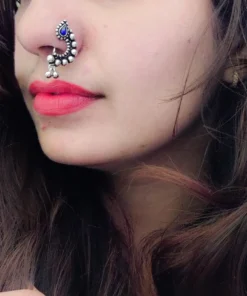
The nath is perhaps the most dramatic piece in this tradition. The Marathi nath is typically a large, crescent-shaped ring worn on the left nostril. It often features pearls, rubies, and green stones along its circumference. Furthermore, the nath connects to the ear or hair via a delicate chain.
Specifically, this style differs from Rajasthani or Bengali nose rings in its size and shape. It tends to be larger with a distinctive “basket” (topi) design at the nose. Many brides consider the nath the most important ornament in their bridal trousseau. Explore nath-style nose pins at Glamaya’s nose pin collection.
-
Ethnic Maharashtrian Oxidised Nose Pin Nath - Premium Quality
Original price was: ₹1,799.00.₹349.00Current price is: ₹349.00.
Bugadi — The Traditional Ear Ornament
Bugadi is a small, crescent-shaped ear cuff worn on the upper ear cartilage. This unique piece has no parallel in other Indian traditions. The bugadi typically features a floral or sun-like motif and clips onto the ear without requiring a piercing.
Additionally, the bugadi is considered one of the 16 shringar (adornments) for a Marathi bride. It adds a distinctive touch that instantly identifies the wearer’s heritage. Browse Glamaya’s earring collection for traditional ear ornaments with similar aesthetic appeal.
Tode — The Traditional Anklet
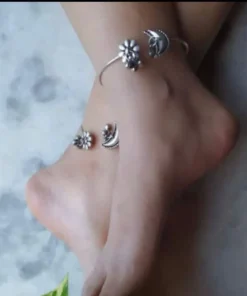
Tode are thick, hollow anklets that produce a gentle jingling sound when the wearer walks. They represent one of the most traditional pieces for married Marathi women. The tode is typically made from silver or gold and features intricate engraving along its surface.
Moreover, tode hold special significance during the “haldi” and “kelvan” ceremonies in weddings. The sound of tode is considered auspicious, symbolising prosperity and marital bliss. Indeed, gifting tode to the bride is a cherished custom across many Marathi communities.
Bangdi and Patlya — Traditional Bangles
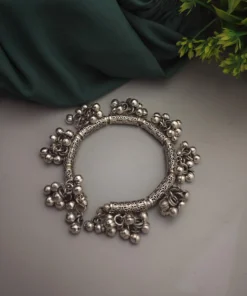
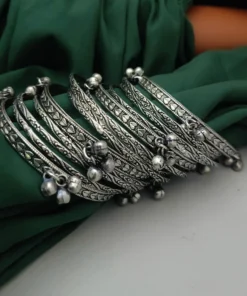
Bangdi refers to traditional gold bangles with a specific cross-section pattern, while patlya are flat, broad bangles with engraved motifs. Both are essential components for married Marathi women. Green glass bangles (hirvya bangdya) hold special cultural importance — every Marathi married woman wears them daily.
Furthermore, gold bangles in sets of two or four are traditional gifts from the bride’s maternal family. Explore bold bangle designs at Glamaya’s bangles and bracelets collection. Similarly, Glamaya’s kada collection features designs reminiscent of traditional bangdi styles.
-
Half Moon Oxidised Foot Kada Set: Trendy Jewelry For Women
Original price was: ₹2,149.00.₹499.00Current price is: ₹499.00.
-
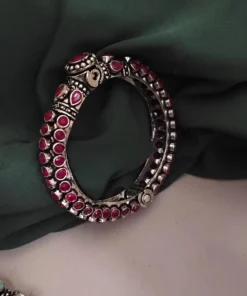
Red Stone Oxidised Bangles: Affordable Elegance For Women
Price range: ₹599.00 through ₹999.00
-
Audacious Ghungroo Bracelet: Adjustable & Trendy
Original price was: ₹1,799.00.₹349.00Current price is: ₹349.00.
-
Stunning 16-piece Oxidised Bangles Set
Original price was: ₹3,799.00.₹849.00Current price is: ₹849.00.
Mohan Mala — The Long Bead Necklace
Mohan mala is a long, multi-strand gold bead necklace that drapes elegantly to the waist. This ornament creates a regal, luxurious appearance suitable for weddings and grand festivals. Traditionally, the mohan mala consists of tiny gold balls strung together in 4–8 strands.
In addition, the mohan mala exemplifies the Maratha preference for layered, bead-based designs over gemstone-heavy styles found in North India. It pairs particularly well with paithani sarees and traditional nine-yard nauvari drapes.
Bridal Maharashtrian Jewellery — The Complete Shringar Set
A Marathi bride’s ornament set (shringar) is one of the most elaborate in Indian wedding traditions. The bridal maharashtrian jewellery ensemble typically includes 16 distinct ornaments — collectively known as the “solah shringar.” Each piece serves both decorative and symbolic purposes.
Specifically, a complete bridal set includes the following items:
- Mundavalya — forehead ornament made of pearls or flowers
- Nath — the large nose ring with chain
- Bugadi — upper ear ornament on cartilage
- Kaan (earrings) — traditional jhumka or karnphool
- Kolhapuri saaj — the primary wedding necklace
- Thushi — choker necklace
- Chinchpeti or vajratik — mid-length necklace
- Mohan mala — long bead necklace
- Bajuband — armlet worn on the upper arm
- Bangdi / green bangles — wrist ornaments
- Kamarpatta — waist belt or chain
- Tode — heavy anklets
- Jodvi — toe rings for married women
- Maang tikka — forehead pendant at hair parting
Moreover, the total weight of a traditional gold bridal set can range from 200 grams to over 500 grams. However, modern brides increasingly opt for lightweight or oxidised alternatives that replicate the look without the cost. Consequently, artificial sets have become a popular choice for engagement ceremonies and pre-wedding photoshoots. Explore Glamaya’s maang tikka collection for stunning bridal forehead pieces.
How Does Maharashtrian Jewellery Compare to South Indian and Rajasthani Styles?
Indian ornamental traditions vary significantly by region. Below is a detailed comparison table to help you understand the differences.
| Feature | Maharashtrian | South Indian | Rajasthani |
|---|---|---|---|
| Primary Metal | Gold, silver | Gold (22K temple gold) | Gold, silver, lac |
| Key Stones | Pearls, rubies, green stones | Kemp (ruby), emerald | Kundan, polki, meenakari |
| Signature Necklace | Kolhapuri saaj, thushi | Mango mala, temple haram | Aad, rani haar |
| Nose Ring Style | Large crescent nath | Small stud (mookuthi) | Large ring (nath) |
| Design Philosophy | Geometric, nature motifs | Temple deity carvings | Enamel work, colour play |
| Best Paired With | Nauvari saree, paithani | Kanjeevaram silk saree | Bandhani, lehenga |
As you can see, maharashtrian jewellery occupies a unique space — more gold-bead-focused than Rajasthani enamel work, yet more geometric than the deity-centric South Indian style. This distinctiveness makes it instantly recognisable.
How to Style Maharashtrian Jewellery with a Nauvari Saree
The nauvari saree (nine-yard drape) is the traditional garment of Maharashtra, and it pairs perfectly with these ornaments. Styling this combination requires understanding balance, proportion, and cultural aesthetics.
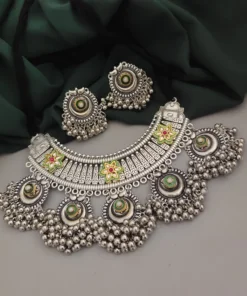
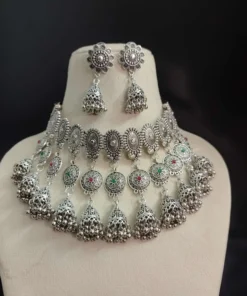
For a complete nauvari look, start with a thushi choker at the base, add a vajratik at mid-length, and layer a kolhapuri saaj as the statement piece. Furthermore, wear a large nath on the left nostril with the chain pinned to your hair or ear. Add bugadi on the upper ears and traditional jhumka-style earrings below.
Additionally, stack green glass bangles on both wrists alongside gold bangdi. A kamarpatta (waist chain) accentuates the nauvari drape beautifully. For example, Peshwai-themed photoshoots often feature this exact layering — and the results are always breathtaking.
Moreover, do not forget the mundavalya (forehead ornament) for bridal or festive occasions. A maang tikka can serve as a modern substitute. The key principle: these ornaments look best when layered generously but harmoniously, with each piece complementing the others.
-
Stylish Oxidised Choker Set: Trendy Necklace & Earrings
Original price was: ₹2,349.00.₹749.00Current price is: ₹749.00.
-
Stylish Choker Necklace & Earring Set: Trendy Combo
Original price was: ₹2,899.00.₹749.00Current price is: ₹749.00.
-
Leaf Choker Necklace Earring Set - Trendy Oxidised Style For Women
Original price was: ₹2,149.00.₹499.00Current price is: ₹499.00.
-
Tribal Choker Earring Set - Trendy & Affordable Jewelry
Original price was: ₹2,149.00.₹499.00Current price is: ₹499.00.
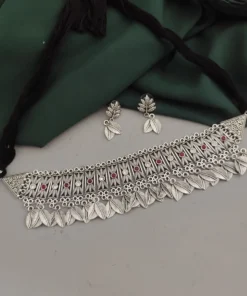
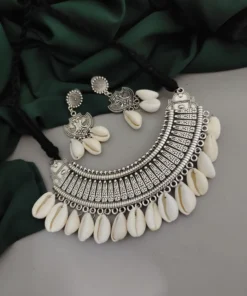
How to Style Maharashtrian Jewellery with Modern Outfits
You do not need a nauvari saree to wear these traditional ornaments. In 2026, fashion-forward women are pairing maharashtrian jewellery with contemporary outfits to create fusion looks that turn heads.
For instance, a single thushi choker looks stunning with a plain kurta or even a solid-colour top. The oxidised finish adds an edgy, bohemian appeal that works with jeans, palazzos, and long skirts. Similarly, a lightweight kolhapuri saaj pendant worn alone creates an elegant statement with a V-neck blouse or dress.
Furthermore, bugadi ear cuffs have become a major trend in 2026. Fashion influencers across Instagram pair oxidised bugadi with crop tops, co-ord sets, and saree gowns. The rustic silver-tone aesthetic of modern reproductions blends seamlessly with Indo-western styling.
However, exercise restraint when mixing traditional and modern. Choose one or two statement pieces rather than wearing the full bridal set with casual wear. Above all, let the ornaments be the focal point — pair them with minimal, solid-coloured clothing for maximum impact.
What Materials Are Used in Maharashtrian Jewellery?
Traditional pieces use several materials, each contributing to the distinctive look and feel of the ornaments.
- Gold (22K or 24K): The primary metal for traditional pieces. Marathi gold ornaments tend to use yellow gold with minimal gemstone work.
- Silver: Used for tode (anklets), jodvi (toe rings), and certain bangle styles. Silver pieces are common for daily wear.
- Pearls (moti): Featured prominently in naths, mundavalya, and certain necklace designs. Basra pearls were historically preferred.
- Rubies and green stones: Set into naths and certain pendant designs for colour contrast.
- Oxidised metal: Modern reproductions use oxidised brass or German silver to replicate the traditional look at lower cost.
- Glass bangles: Green glass bangles are culturally essential for married Marathi women.
Indeed, the emphasis on gold beadwork (rather than gemstones) sets this tradition apart from North Indian kundan and South Indian kemp styles. As referenced by Cultural India, this goldwork tradition reflects the artisans’ mastery of metal-smithing techniques passed down through generations.
How to Care for and Maintain Maharashtrian Jewellery
Proper care extends the life and beauty of your collection. Whether you own gold originals or oxidised reproductions, follow these maintenance tips.
For gold pieces, clean with a soft cloth and warm soapy water every 2–3 months. Avoid exposing gold to perfume, hairspray, or harsh chemicals. Additionally, store each piece in a separate soft pouch to prevent scratching. Get gold pieces professionally polished once a year.
For oxidised and German silver pieces, keep them away from water and moisture. Wipe with a dry cotton cloth after each wear to remove sweat and oils. Furthermore, store oxidised ornaments in zip-lock bags with silica gel packets to prevent tarnishing. If tarnishing occurs, gently rub with a baking soda paste and rinse quickly.
Moreover, never store different metals together — gold and oxidised pieces can react when in contact. Remove all ornaments before swimming, bathing, or exercising. These simple steps will keep your collection looking radiant for years.
Where to Buy Maharashtrian Jewellery Online
Finding authentic pieces has become easier than ever, thanks to trusted online stores. Glamaya offers a curated collection of oxidised and fashion pieces — from chokers and naths to bangles and complete sets. Every item ships with free delivery across India and comes with easy return options.
Additionally, Glamaya’s collection features designs inspired by traditional kolhapuri saaj, thushi, and nath styles at prices starting under ₹500. For bridal pieces, explore Glamaya’s ring collection for jodvi-inspired designs and combo sets for complete looks.
Furthermore, when buying maharashtrian jewellery online, check for clear product photos, size details, and material descriptions. Read customer reviews and verify return policies. Glamaya ticks all these boxes, making it a top choice for shopping in 2026.
Frequently Asked Questions About Maharashtrian Jewellery
What is the most important piece of maharashtrian jewellery?
The kolhapuri saaj is considered the most important piece. It serves as the primary wedding necklace and symbolises marital commitment in Maharashtrian culture. Brides receive it during the wedding ceremony, similar to a mangalsutra.
What is the difference between thushi and choker?
Thushi is a specific type of choker unique to this tradition. It features tightly woven gold beads in a rope-like pattern, while a generic choker can refer to any close-fitting necklace. Therefore, all thushis are chokers, but not all chokers are thushis.
Can non-Maharashtrians wear maharashtrian jewellery?
Absolutely. These ornaments have universal aesthetic appeal and can be worn by anyone. In fact, oxidised reproductions have become popular across India for their bold, rustic look that complements multiple outfit styles.
What is bugadi?
Bugadi is a small, crescent-shaped ear cuff worn on the upper ear cartilage. It is unique to this Marathi tradition and is part of the 16 shringar (bridal adornments). The bugadi clips on without requiring a piercing.
How much does a complete bridal set cost?
A traditional gold bridal set can cost ₹3–15 lakh depending on weight and purity. However, oxidised and artificial sets are available at Glamaya starting from ₹1,500 to ₹5,000 for a complete look.
What is kolhapuri saaj?
Kolhapuri saaj is a long necklace featuring 21 pendant elements representing deities and auspicious motifs. It originates from Kolhapur city in Maharashtra. Consequently, it serves as the signature wedding necklace in this tradition.
How do I maintain oxidised pieces?
Keep oxidised pieces dry and store in zip-lock bags with silica gel. Wipe with a dry cotton cloth after wearing. Avoid contact with moisture, perfume, and chemicals. Additionally, use baking soda paste for gentle cleaning if tarnishing occurs.
What is the significance of nath in maharashtrian jewellery?
The nath holds deep significance as a symbol of marriage and feminine beauty. It is one of the 16 shringar items and is traditionally gifted by the groom’s family. Moreover, the Maharashtrian nath is larger and more ornate than most Indian nose ring styles.
Can I wear these ornaments with western outfits?
Yes, you can style these pieces with western outfits beautifully. A single thushi choker or oxidised bugadi ear cuff pairs well with solid-colour tops, dresses, and denim. Choose one statement piece rather than layering multiple ornaments.
Where can I buy affordable maharashtrian jewellery online?
Glamaya.com offers one of the best collections of affordable pieces online. You will find oxidised chokers, naths, bangles, and complete sets at prices starting under ₹500. Furthermore, Glamaya provides free shipping and easy returns across India.