
South Indian Jewellery Guide — Temple Sets, Kemp & Silk Saree Pairing (2026)
- South indian jewellery draws from over 2,000 years of Chola, Pallava, and Vijayanagara temple artistry.
- Essential pieces include temple necklaces, kemp stone sets, mango mala, jimikki earrings, vanki, and oddiyanam waist belts.
- Each southern state — Tamil Nadu, Andhra Pradesh, Karnataka, and Kerala — has its own signature designs.
- Oxidised and fashion reproductions let you enjoy the temple aesthetic at a fraction of gold prices.
- Glamaya offers a curated collection of temple-inspired designs with pan-India shipping.
South indian jewellery is celebrated worldwide for its bold, sculptural temple aesthetic and rich gold tones. Rooted in centuries of Dravidian temple architecture, Chola bronze craftsmanship, and royal patronage, this ornamental tradition remains one of the most recognisable in India. Whether you are a bride shopping for a Kanjeevaram saree pairing or a fashion enthusiast exploring ethnic accessories, understanding these ornaments helps you make confident style choices. This 2026 guide covers the history, state-wise specialities, bridal essentials, styling tips, and trusted online sources.
What Is South Indian Jewellery?
South indian jewellery refers to the traditional ornamental styles from Tamil Nadu, Andhra Pradesh (including Telangana), Karnataka, and Kerala. It is distinguished by heavy goldwork, temple deity motifs, kemp (ruby-coloured) stones, and intricate repoussé craftsmanship. Unlike North Indian kundan or Rajasthani meenakari, this tradition prioritises solid gold forms inspired by temple sculptures.
Furthermore, this tradition places strong emphasis on sets — a bride typically wears 10–16 matching pieces from head to toe. The ornaments often depict Hindu deities such as Lakshmi, Ganesha, and temple gopuram (tower) motifs. Additionally, the use of kemp stones (synthetic rubies in closed settings) gives these pieces their signature warm red-and-gold palette.
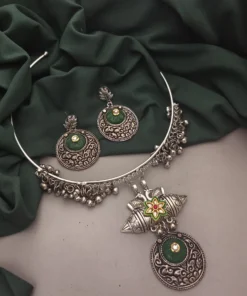
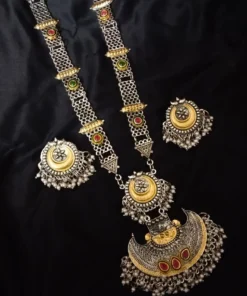
In recent years, oxidised metal and German silver reproductions have brought the temple aesthetic to a wider audience. Consequently, women across India now wear temple-inspired ornaments with everything from silk sarees to modern fusion outfits. Explore stunning temple-inspired pieces at Glamaya’s necklace collection.
History of South Indian Jewellery — Chola, Pallava, and Vijayanagara Dynasties
The history of this ornamental tradition stretches back over 2,000 years. The earliest evidence comes from Sangam-era Tamil literature (300 BCE–300 CE), which describes elaborate gold ornaments worn by royalty and temple dancers (devadasis).
However, the tradition reached its zenith under three great dynasties. The Pallava dynasty (3rd–9th century CE) introduced temple architecture motifs into ornament design. Subsequently, the Chola dynasty (9th–13th century CE) elevated gold craftsmanship to an art form — their bronze-casting techniques influenced jewellery making across the region. According to Wikipedia’s article on Indian jewellery, Chola artisans pioneered the “lost wax” (cire perdue) casting technique still used today.
Moreover, the Vijayanagara Empire (14th–17th century CE) based in Hampi, Karnataka, became the greatest patron of this tradition. Their courts demanded increasingly elaborate temple sets for royal women and temple idols. As a result, the ornament styles we recognise today — mango mala, kemp haram, and vanki — crystallised during this period.
Essential Pieces of South Indian Jewellery by State
Each southern state has developed its own signature ornamental identity within the broader tradition. Below is a state-by-state guide to the most iconic pieces.
Tamil Nadu — Temple Sets, Kemp Stones, and Jimikki
Tamil Nadu is the heartland of temple-style this ornamental heritage. The state’s artisans specialise in kemp stone settings, where synthetic rubies and emeralds are set in gold using the “kundan” closed-back technique. The temple haram (long necklace) featuring Lakshmi or peacock pendants is the most iconic piece.
Additionally, Tamil Nadu is known for the mango mala (paisley-shaped gold necklace), the jimikki kammal (bell-shaped dangling earrings made famous by the Malayalam film song), and the oddiyanam (broad waist belt). For example, every Tamil bride wears a minimum of 5 necklaces — from a choker to a hip-length haram. Explore similar choker styles at Glamaya’s choker collection.
-
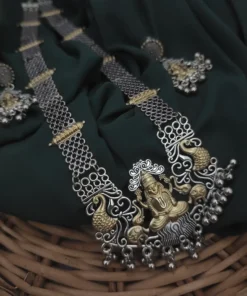
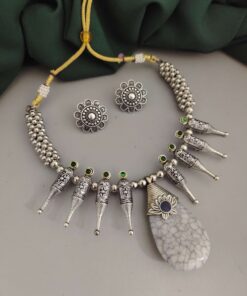
 0xidised Two Tone Temple Necklace Earrings Set
Original price was: ₹2,149.00.₹749.00Current price is: ₹749.00.
0xidised Two Tone Temple Necklace Earrings Set
Original price was: ₹2,149.00.₹749.00Current price is: ₹749.00. -
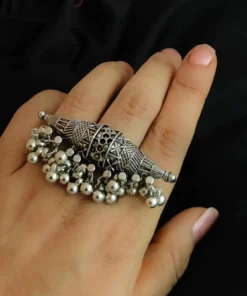
Ethnic Oxidised Adjustable Finger Ring - Unique Designs For Women
Original price was: ₹1,799.00.₹349.00Current price is: ₹349.00.
-
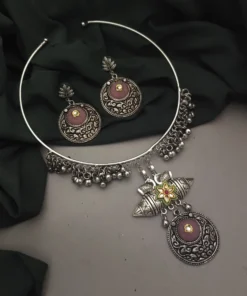
Pink Ethnic Hasli Necklace & Earring Set - Traditional Indian Style
Original price was: ₹2,349.00.₹749.00Current price is: ₹749.00.
-
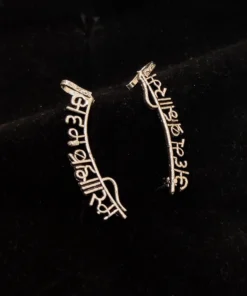
Aham Brahmasmi Oxidised Cute Earcuffs
Original price was: ₹1,799.00.₹349.00Current price is: ₹349.00.
Andhra Pradesh — Guttapusalu and Lakshmi Haram
Andhra Pradesh contributes some of the most distinctive designs to this tradition. The guttapusalu (cluster earrings and necklaces with dangling pearl bunches) is perhaps the most recognisable Andhra speciality. These pieces create a luxurious, cascading effect of pearls and gold.
Furthermore, the lakshmi haram (necklace with a series of Goddess Lakshmi pendants) originated in Andhra’s temple towns. The pacchi work technique — where uncut gems are set in gold using lac — is another hallmark of Andhra craftsmanship. Similarly, the raani haar (long chain reaching below the waist) remains a bridal essential in Telugu weddings.
Karnataka — Kasulaperu and Laxmi Devi Designs
Karnataka’s contribution to ornamental tradition centres on the kasulaperu — a necklace made entirely of gold coins (kasu) strung together. This design reflects the influence of the Vijayanagara Empire, where gold coins were abundant. The kasulaperu ranges from short choker-length to waist-length versions.
Moreover, the addige (a multi-chain gold necklace) and the jhumka styles from Dharwad and Mysore add regional flavour. Karnataka brides often combine Vijayanagara-style temple sets with simpler addige chains for a layered look. Indeed, this blending of opulence and subtlety defines the Karnataka approach to traditional ornamentation.
Kerala — Palakka Mala and Nagapadam
Kerala’s ornamental tradition is instantly recognisable by its use of green and red stones in leaf-shaped settings. The palakka mala (leaf necklace with green stones) is the state’s most iconic ornament. As a result, every Malayali bride wears a palakka set during the wedding ceremony.
Additionally, the nagapadam (snake-hood pendant) and the karimani mala (black bead necklace similar to a mangalsutra) are essential Kerala pieces. The mullamottu mala (jasmine-bud chain) in pure gold is another beloved design. These pieces reflect Kerala’s unique blend of Hindu and colonial Portuguese influences on ornamentation. Explore earring styles similar to traditional jimikki at Glamaya’s jhumka collection.
-
Elegant Premium Stone Hasli Necklace & Earring Set
Original price was: ₹2,149.00.₹749.00Current price is: ₹749.00.
-
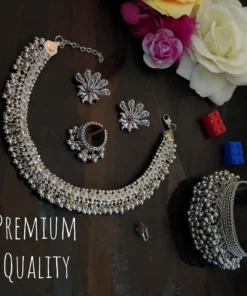
Exquisite Jewelry Set: Necklace, Earrings, Bracelet, Nosepin, Rings
Original price was: ₹2,899.00.₹599.00Current price is: ₹599.00.
-
Chic Two-tone Bangles Set: Stylish Armlets Combo For Women
Original price was: ₹14,349.00.₹2,699.00Current price is: ₹2,699.00.
-
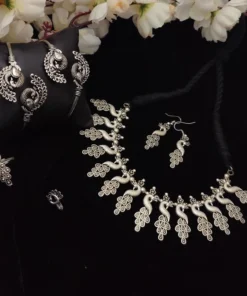
Exquisite Peacock Jewelry Combo Set - Premium Quality & Affordable
Original price was: ₹2,899.00.₹599.00Current price is: ₹599.00.

Bridal South Indian Jewellery — The Complete Wedding Set
A temple-style bridal set is among the heaviest and most elaborate in the world. A Tamil or Telugu bride may wear 500 grams to over 1 kilogram of gold ornaments. The complete set covers the body from head to toe.
Specifically, a typical bridal ensemble includes these pieces:
- Nethichutti / maang tikka — forehead ornament at the centre parting
- Surya and Chandra — sun and moon hair clips on either side
- Jhumkas / jimikki — bell-shaped dangling earrings
- Mookuthi — small nose stud (typically diamond)
- Choker (attigai) — the first necklace layer
- Short haram — mid-length temple necklace
- Long haram — hip-length statement necklace
- Mango mala — paisley-motif necklace
- Vanki / armlet — upper arm ornament shaped like a serpent
- Bangles — gold bangles in sets of 4–8
- Oddiyanam — broad gold waist belt
- Payal / anklets — silver anklets with bells
- Metti — silver toe rings
Moreover, modern brides often complement their sets with a maang tikka from Glamaya’s maang tikka collection. The trend towards lighter, oxidised alternatives continues to grow, especially for reception outfits and pre-wedding photoshoots.
How Does South Indian Jewellery Compare to North Indian Styles?
The differences between South and North Indian ornamental traditions are striking. Below is a comparison table highlighting the major distinctions.
| Feature | South Indian Jewellery | North Indian Jewellery |
|---|---|---|
| Primary Metal | 22K gold (heavier pieces) | Gold with polki/kundan work |
| Key Stones | Kemp (ruby), emerald | Kundan, polki, meenakari |
| Design Inspiration | Temple architecture, deities | Mughal gardens, geometry |
| Signature Necklace | Temple haram, mango mala | Rani haar, choker set |
| Earring Style | Jimikki, chandbali | Jhumka, chandbali, bali |
| Waist Ornament | Oddiyanam (broad belt) | Kamarband (chain belt) |
| Best Paired With | Kanjeevaram silk saree | Lehenga, Banarasi saree |
As this comparison shows, this southern tradition is heavier, more temple-focused, and relies on gold mass rather than gemstone colour. In contrast, North Indian styles use lighter gold settings filled with coloured stones and enamel work. However, both traditions share a love for layering multiple necklaces.
How to Style South Indian Jewellery with Silk Sarees
Silk sarees — particularly the Kanjeevaram from Tamil Nadu — are the natural partner for these ornaments. The heavy gold zari of a silk saree complements the warm gold tones of temple ornaments. Styling this pairing correctly creates a look of timeless elegance.
For a traditional wedding or festival look, start with a temple choker (attigai) at the neckline. Layer a mid-length kemp haram over it, then add a long mango mala reaching to the waist. Furthermore, wear jimikki or chandbali earrings that match the necklace motifs. Add a vanki on the upper arm and an oddiyanam at the waist.
Additionally, keep the blouse simple — a plain gold or contrast blouse lets the ornaments shine without visual competition. Match the nose stud metal to the necklace metal. For example, a deep-red Kanjeevaram with gold temple sets and fresh jasmine flowers in the hair creates the quintessential temple-style bridal look.
Moreover, explore waist belt designs at Glamaya’s waist belt collection for oddiyanam-inspired pieces perfect for silk saree styling. The right waist ornament transforms the silhouette dramatically.
-
Pink Kundan Hasli Necklace Earring Set: Stylish Wedding & Party Wear
₹2,899.00
-
Green Oxidized Kundan Hasli Set - Traditional Women's Jewelry
Original price was: ₹2,899.00.₹749.00Current price is: ₹749.00.
-
Exquisite Oxidised Kundan Necklace Set
Original price was: ₹2,899.00.₹749.00Current price is: ₹749.00.
-
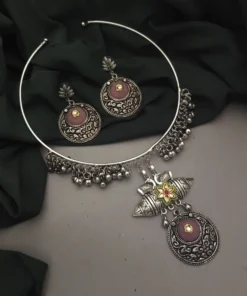
Exquisite Kundan Choker Earring Set: Traditional Elegance
Original price was: ₹2,149.00.₹499.00Current price is: ₹499.00.

How to Style South Indian Jewellery with Cotton and Modern Outfits
You do not need a silk saree to wear these ornaments in 2026. The trend of mixing temple ornaments with casual and modern outfits has exploded on social media and runway shows.
For instance, a single kemp choker looks striking with a white cotton saree or linen kurta. The contrast between the rustic temple aesthetic and modern minimalist fabric creates an elevated bohemian effect. Similarly, oxidised temple jhumkas pair beautifully with crop tops, co-ord sets, and even denim jackets.
Furthermore, try layering a small mango mala over a plain black dress for a cocktail event. The gold temple motifs become conversation starters. Above all, the rule for modern styling is restraint — choose one or two pieces in this tradition rather than the full bridal set. Let each ornament command individual attention.
Additionally, explore Glamaya’s combo sets for pre-matched temple-style sets that work with both ethnic and fusion outfits. These curated combinations take the guesswork out of styling.
What Materials and Craftsmanship Define South Indian Jewellery?
The materials and techniques used in these ornaments differ from other Indian traditions in several important ways.
- 22K Gold: Southern states prefer 22-karat gold (91.6% pure) for its rich yellow colour. The higher gold content makes pieces heavier but also more valuable.
- Kemp Stones: Synthetic rubies in closed-back settings that create the signature red-and-gold palette. Kemp work originated in temple idol decoration.
- Uncut Diamonds (Polki): Used in premium pieces, especially in Andhra Pradesh’s pacchi work tradition.
- Pearls: Hyderabad’s pearl industry supplies freshwater pearls for guttapusalu and haram designs.
- Temple Repoussé: A technique where gold sheets are hammered from the reverse to create raised deity figures. This is the hallmark of temple jewellery craftsmanship.
- Oxidised Metal: Modern reproductions use oxidised brass, copper, or German silver coated to mimic the temple gold aesthetic.
Indeed, the GI tag registry recognises several temple jewellery crafts as geographically protected, including Nagercoil temple jewellery. This official recognition underscores the unique heritage value of these techniques.
How to Care for South Indian Jewellery
Proper maintenance ensures your these ornaments retain its beauty for decades. Gold temple pieces and oxidised reproductions require different care approaches.
For gold temple pieces, store in individual soft cloth pouches to prevent scratching. Clean with a mild soap solution and soft brush every 3–4 months. Additionally, check kemp stone settings annually — the lac (resin) holding the stones can dry out over time. Never expose gold pieces to chlorine, bleach, or abrasive cleaners.
For oxidised and fashion pieces, keep away from moisture entirely. Wipe with a dry microfibre cloth after each use. Furthermore, store in airtight zip-lock bags with silica gel packets. If the oxidised finish fades, a professional re-coating is inexpensive and restores the original look. Remove all ornaments before bathing, swimming, or applying perfume.
Moreover, have a jeweller tighten clasps and check for loose kemp stones before wedding season. Preventive maintenance avoids costly repairs and embarrassing breakages during important events.
Where to Buy South Indian Jewellery Online
Shopping for these ornaments online has become convenient and reliable. Glamaya offers an extensive collection of temple-inspired necklaces, jhumkas, bangles, and bridal sets at affordable prices. Every piece comes with detailed photos, size specifications, and material descriptions.
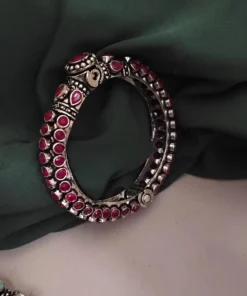
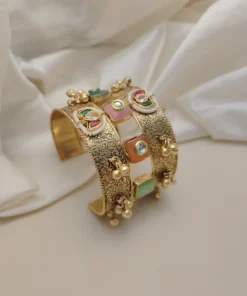
Additionally, Glamaya’s earring collection features jimikki-style and chandbali designs perfect for silk saree pairings. Explore Glamaya’s bangles section for gold-tone and oxidised bangle sets that complete the look.
Furthermore, look for sellers who provide detailed material descriptions and clear return policies. Glamaya offers free shipping across India, easy returns, and responsive customer support — making it a top choice for temple jewellery shopping in 2026.
-
Red Stone Oxidised Bangles: Affordable Elegance For Women
Price range: ₹599.00 through ₹999.00
-
Elegant Premium Stone Hasli Necklace & Earring Set
Original price was: ₹2,149.00.₹749.00Current price is: ₹749.00.
-
Ziana Semi Precious Stones Adjustable Bracelet Kada
Original price was: ₹6,249.00.₹1,699.00Current price is: ₹1,699.00.
-
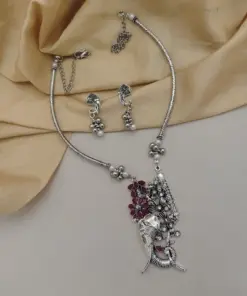
Abhiprithi Traditional Oxidized Silver Elephant Hasli Necklace & Earrings Set
Original price was: ₹1,799.00.₹749.00Current price is: ₹749.00.
South Indian Jewellery Buying Tips for 2026
Before making a purchase, keep these practical tips in mind. First, determine your primary use — daily wear, festive occasions, or bridal — because this affects material choice. Oxidised pieces work best for daily and casual styling, while gold-plated and kundan pieces suit weddings and formal events.
Additionally, check the weight of each piece before ordering. South indian jewellery tends to be heavier than North Indian styles, so confirm that you are comfortable wearing the piece for the intended duration. For events lasting over 4 hours, choose lighter reproductions over heavy metal pieces.
Furthermore, verify sizing for rigid pieces like chokers and oddiyanam waist belts. Measure your neck or waist circumference and compare with the seller’s size chart. Glamaya provides precise measurements for every product, reducing the risk of sizing issues. Moreover, read customer reviews with photos to see how pieces look when worn. These simple precautions ensure a satisfying purchase every time.
Frequently Asked Questions About South Indian Jewellery
What makes south indian jewellery different from North Indian styles?
South indian jewellery uses heavier 22K gold, temple deity motifs, and kemp stones. In contrast, North Indian styles favour kundan, polki, and meenakari techniques with lighter settings. The southern tradition draws from temple architecture rather than Mughal aesthetics.
What are kemp stones in this tradition?
Kemp stones are synthetic rubies set in gold using a closed-back technique with lac (resin). They create the signature red-and-gold palette found in temple ornaments. Originally, kemp work was used to decorate temple idols before being adapted for personal ornaments.
How much does a bridal set of south indian jewellery cost?
A traditional gold bridal set can cost ₹5–30 lakh depending on weight and stone quality. However, oxidised and fashion reproductions are available at Glamaya starting from ₹1,000 to ₹8,000 for complete sets.
What is a mango mala?
Mango mala is a necklace featuring paisley-shaped (mango motif) gold pendants strung together. It is one of the most iconic temple ornaments. The mango shape symbolises fertility and prosperity in Hindu culture.
Can I wear these ornaments with non-silk outfits?
Absolutely. In 2026, fashion trends encourage pairing temple ornaments with cotton sarees, linen kurtas, and even western outfits. Choose one or two statement pieces rather than the full bridal set for modern looks.
What is an oddiyanam?
An oddiyanam is a broad gold waist belt worn over a saree. It is an essential part of this tradition bridal sets. The belt features temple motifs and kemp stone settings, and it accentuates the waistline dramatically.
How do I identify authentic temple jewellery?
Authentic temple pieces use 22K gold with lac-set kemp stones and repoussé deity work. Check for hallmark stamps on gold. For fashion reproductions, look for even plating, secure stone settings, and detailed craftsmanship from trusted sellers like Glamaya.
What is guttapusalu?
Guttapusalu refers to ornaments featuring clusters of pearls dangling from gold elements. It is an Andhra Pradesh speciality within this ornamental tradition. Guttapusalu necklaces and earrings create a luxurious cascading effect.
How should I store these temple ornaments?
Store gold pieces in individual soft cloth pouches. Keep oxidised pieces in airtight zip-lock bags with silica gel. Avoid storing different metals together. Furthermore, keep ornaments away from direct sunlight, moisture, and chemicals.
Where can I buy affordable these ornaments online?
Glamaya.com offers one of the widest selections of affordable temple-inspired ornaments online. You will find necklaces, jhumkas, waist belts, nose pins, and complete sets starting under ₹500 with free shipping across India.