Complete Guide to Oxidised Jewellery — Meaning, Types, Styling & Care (2026)
Quick Summary — Key Takeaways
- Oxidised jewellery is base-metal or silver-alloy jewellery treated with a chemical darkening process called oxidation, giving it a vintage, antique finish.
- It has roots in Indian craftsmanship spanning over 500 years, particularly in Rajasthan, Odisha, and Himachal Pradesh.
- Available in 15+ types — necklaces, chokers, jhumkas, bangles, kadas, hasli, rings, maang tikka, nose pins, and more.
- These pieces pair beautifully with sarees, kurtis, lehengas, and even western outfits like jeans and blazers.
- Price range: ₹99 to ₹2,500 for most pieces — making it one of the most affordable jewellery categories in India.
- Requires minimal care: store in zip-lock bags, avoid water and perfume, and clean with a soft cloth.
- Glamaya offers 1,270+ handcrafted oxidised jewellery designs with free shipping across India.
What is Oxidised Jewellery? Meaning and Origin
Oxidised jewellery is a type of fashion jewellery where a base metal — typically a zinc, copper, or silver alloy — is deliberately treated with a chemical oxidation process to produce a dark, antique-looking finish. The word oxidised means exposed to oxygen or a chemical agent that accelerates tarnishing, resulting in that signature blackened, vintage patina that has become enormously popular across India.
In Hindi, oxidised ka matlab hai okseedaikrit (ऑक्सीडाइज़्ड) — essentially metal that has been chemically darkened. The oxidised meaning in the context of jewellery is straightforward: a deliberate chemical treatment that darkens the metal surface. The term oxidised jewellery meaning refers specifically to ornaments that undergo this controlled tarnishing to achieve an aged, tribal, or rustic aesthetic.
Unlike accidental tarnish on regular silver, the darkening on these pieces is intentional, even, and designed to highlight the intricate engravings and motifs carved into the metal surface.
This craft tradition has deep roots in Indian artisanal heritage. Historical records trace oxidised metalwork to Rajasthani silversmiths (known as Sunars) who practised the technique as early as the 15th century. The craft also flourished in Odisha’s Cuttack — famous for its silver filigree — and in the tribal belts of Himachal Pradesh and Gujarat, where such ornaments were part of everyday ethnic wear for centuries before they became a pan-Indian fashion trend.
Is It Real Silver?
Not always. Most oxidised jewellery available in the market today is made from base metal alloys (zinc, copper, tin, or brass) that are electroplated and then chemically darkened. However, premium pieces in this category can be made from 925 sterling silver that undergoes a liver-of-sulphur treatment to achieve the dark finish.
The key difference is weight, durability, and price — genuine oxidised silver pieces cost 3–5× more than base-metal versions but last significantly longer. At Glamaya, product descriptions clearly mention the material composition so you always know what you are buying.
Where Does It Come From?
India is the world’s largest producer and consumer of oxidised jewellery. The three primary production hubs are:
- Rajasthan (Jaipur, Jodhpur, Udaipur): Known for bold, statement necklaces and kadas with Rajputana motifs — peacocks, elephants, and temple designs.
- Odisha (Cuttack): Specialises in delicate silver filigree work with an oxidised finish, often featuring floral and geometric patterns.
- Himachal Pradesh (Kullu, Kinnaur): Produces tribal-style pieces with chunky designs, often incorporating semi-precious stones and turquoise.
Other notable production centres include Gujarat’s Kutch region and parts of Madhya Pradesh where tribal metalworking traditions remain strong.
How Is It Made? (Step-by-Step Process)
The manufacturing process involves 6 distinct stages:
- Mould Creation: Artisans carve the design into a wax or rubber mould. Traditional workshops still use hand-carved moulds for premium pieces.
- Metal Casting: Molten base metal (zinc alloy or silver alloy) is poured into the mould and allowed to cool and solidify.
- Finishing and Filing: Rough edges are filed smooth. Intricate details are hand-chiselled or machine-pressed for sharper definition.
- Electroplating: The piece receives a thin coating of silver or nickel via electroplating to improve appearance and reduce skin reactivity.
- Oxidation: The plated piece is dipped in a liver-of-sulphur solution or potassium sulphide bath. This creates the characteristic black or dark grey patina across the entire surface.
- Selective Polishing: Raised surfaces are lightly buffed to remove the dark layer, creating contrast — dark recesses with bright, polished highlights. This is what gives oxidised jewellery its distinctive depth and dimension.
Types of Oxidised Jewellery
Oxidised jewellery is available in virtually every ornament category. Below is a comprehensive breakdown of the most popular types of oxidised jewellery, each with its own design vocabulary and styling potential.
-
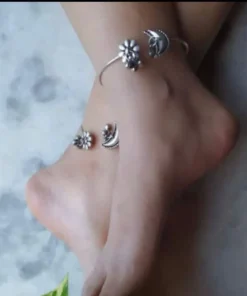
 Half Moon Oxidised Foot Kada Set: Trendy Jewelry For Women
Original price was: ₹2,149.00.₹499.00Current price is: ₹499.00.
Half Moon Oxidised Foot Kada Set: Trendy Jewelry For Women
Original price was: ₹2,149.00.₹499.00Current price is: ₹499.00. -
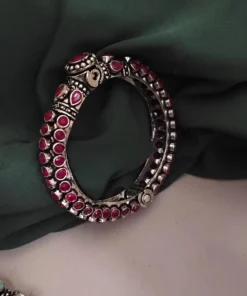
Red Stone Oxidised Bangles: Affordable Elegance For Women
Price range: ₹599.00 through ₹999.00
-
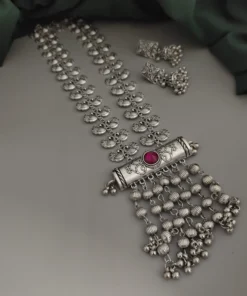
Mayur Chain Necklaceset
Original price was: ₹2,149.00.₹749.00Current price is: ₹749.00.
-
Elegant Hasli Choker Necklace Set with Elephant Design
Original price was: ₹2,899.00.₹799.00Current price is: ₹799.00.
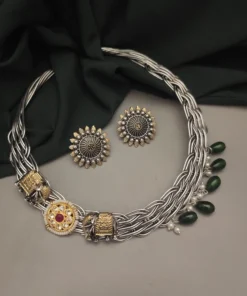
Necklaces and Chokers
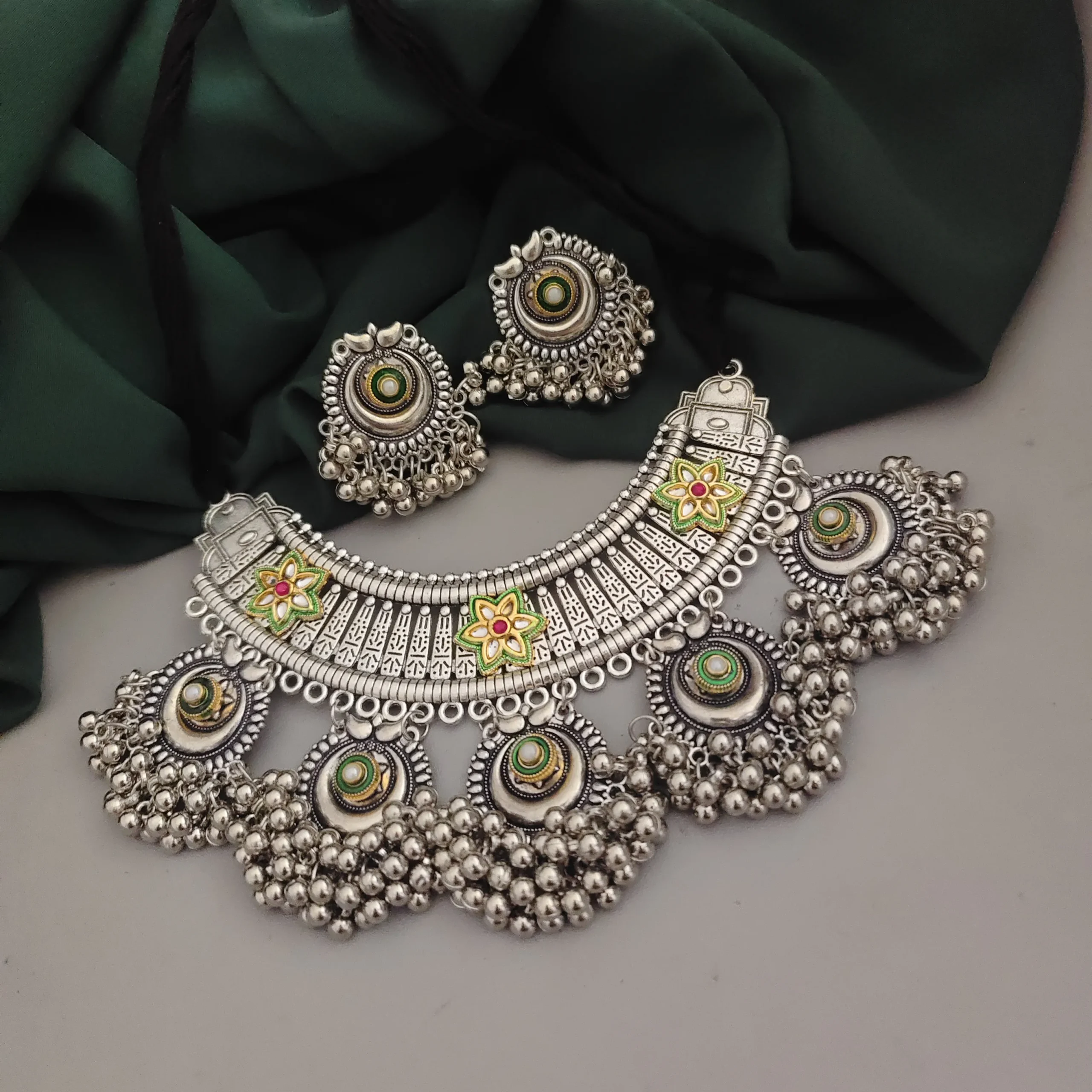
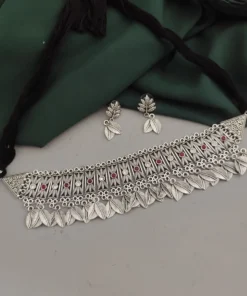
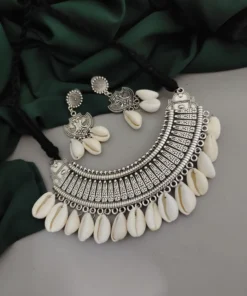
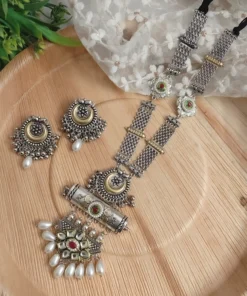
Oxidised necklaces range from delicate pendant chains to heavy, multi-layered statement pieces. Chokers in this style sit close to the collarbone and are particularly popular with off-shoulder tops, deep-neck blouses, and V-neck kurtis.
Common motifs include temple designs, Lakshmi coins, ghungroo (bell) detailing, and peacock patterns. A well-chosen oxidised choker can single-handedly transform a plain outfit into a head-turning ensemble.
-
Stylish Oxidised Choker Set: Trendy Necklace & Earrings
Original price was: ₹2,349.00.₹749.00Current price is: ₹749.00.
-
Stylish Choker Necklace & Earring Set: Trendy Combo
Original price was: ₹2,899.00.₹749.00Current price is: ₹749.00.
-
Leaf Choker Necklace Earring Set - Trendy Oxidised Style For Women
Original price was: ₹2,149.00.₹499.00Current price is: ₹499.00.
-
Tribal Choker Earring Set - Trendy & Affordable Jewelry
Original price was: ₹2,149.00.₹499.00Current price is: ₹499.00.
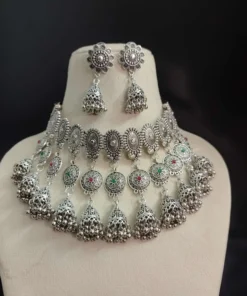
Jhumkas and Earrings
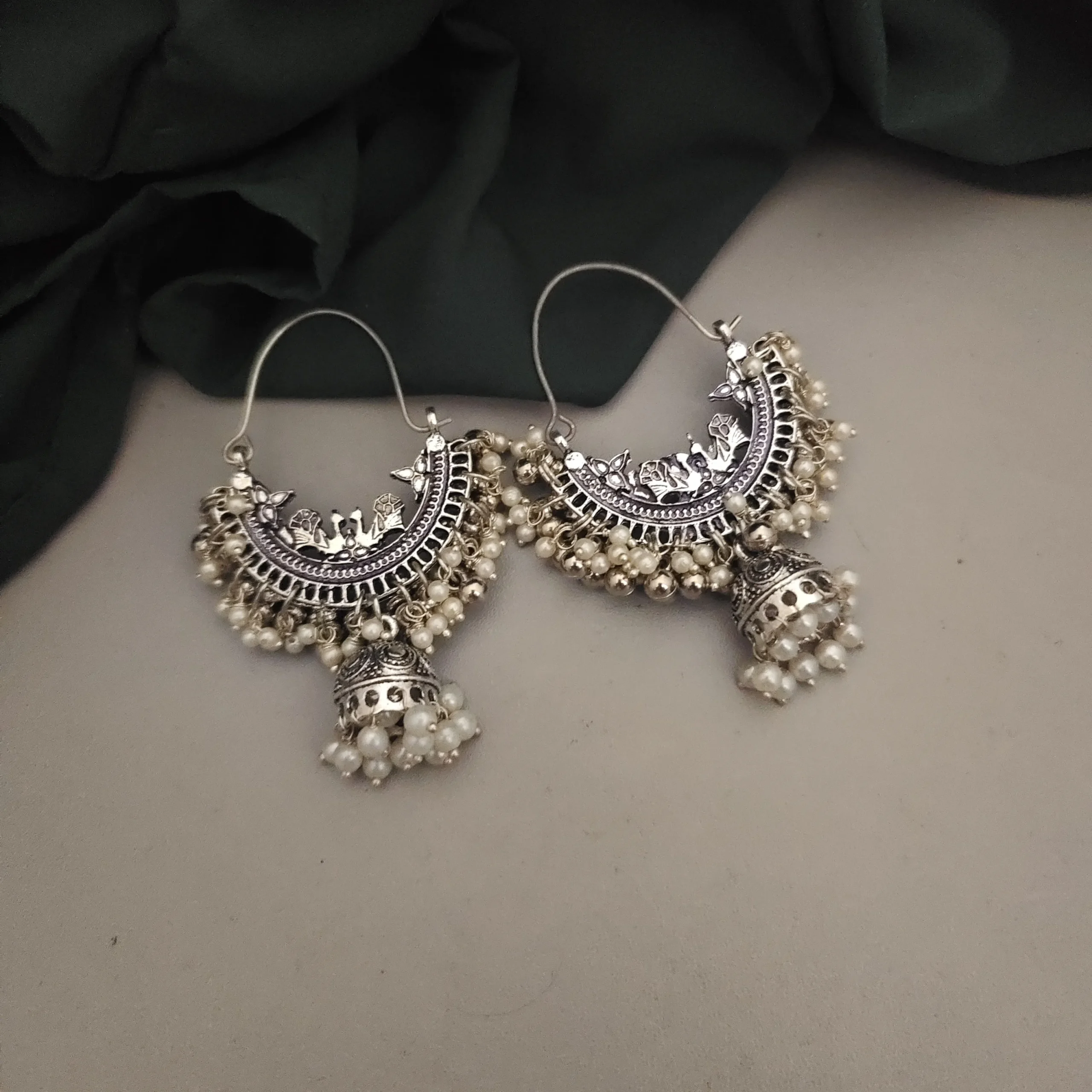
Oxidised jhumkas are arguably the single most popular category in this jewellery style across India. The bell-shaped dome, often adorned with mirror work, glass beads, or ghungroo, creates a signature silhouette that works with virtually every Indian outfit.
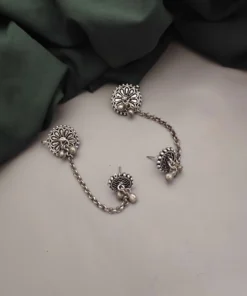
Beyond jhumkas, oxidised earrings are available as studs, hoops, danglers, ear cuffs, and chandbalis. Lightweight jhumkas in this finish weighing just 8–15 grams are ideal for daily wear without causing earlobe strain.
-
Glamorous Oxidised Jhumki Bracelet For Women
Original price was: ₹1,799.00.₹499.00Current price is: ₹499.00.
-
Sneha Oxidized Two Tone Earcuff Earrings
Original price was: ₹2,149.00.₹499.00Current price is: ₹499.00.
-
Layla Jhumki Oxidised Anklet
Original price was: ₹2,349.00.₹499.00Current price is: ₹499.00.


-
Stylish Oxidised Chain Earclips Earrings - Trendy Designs For Women
Original price was: ₹2,149.00.₹499.00Current price is: ₹499.00.
-
Glamorous Oxidised Jhumki Bracelet For Women
Original price was: ₹1,799.00.₹499.00Current price is: ₹499.00.
-
Sneha Oxidized Two Tone Earcuff Earrings
Original price was: ₹2,149.00.₹499.00Current price is: ₹499.00.
-
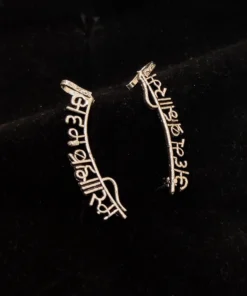
Aham Brahmasmi Oxidised Cute Earcuffs
Original price was: ₹1,799.00.₹349.00Current price is: ₹349.00.
Bangles, Bracelets and Kadas
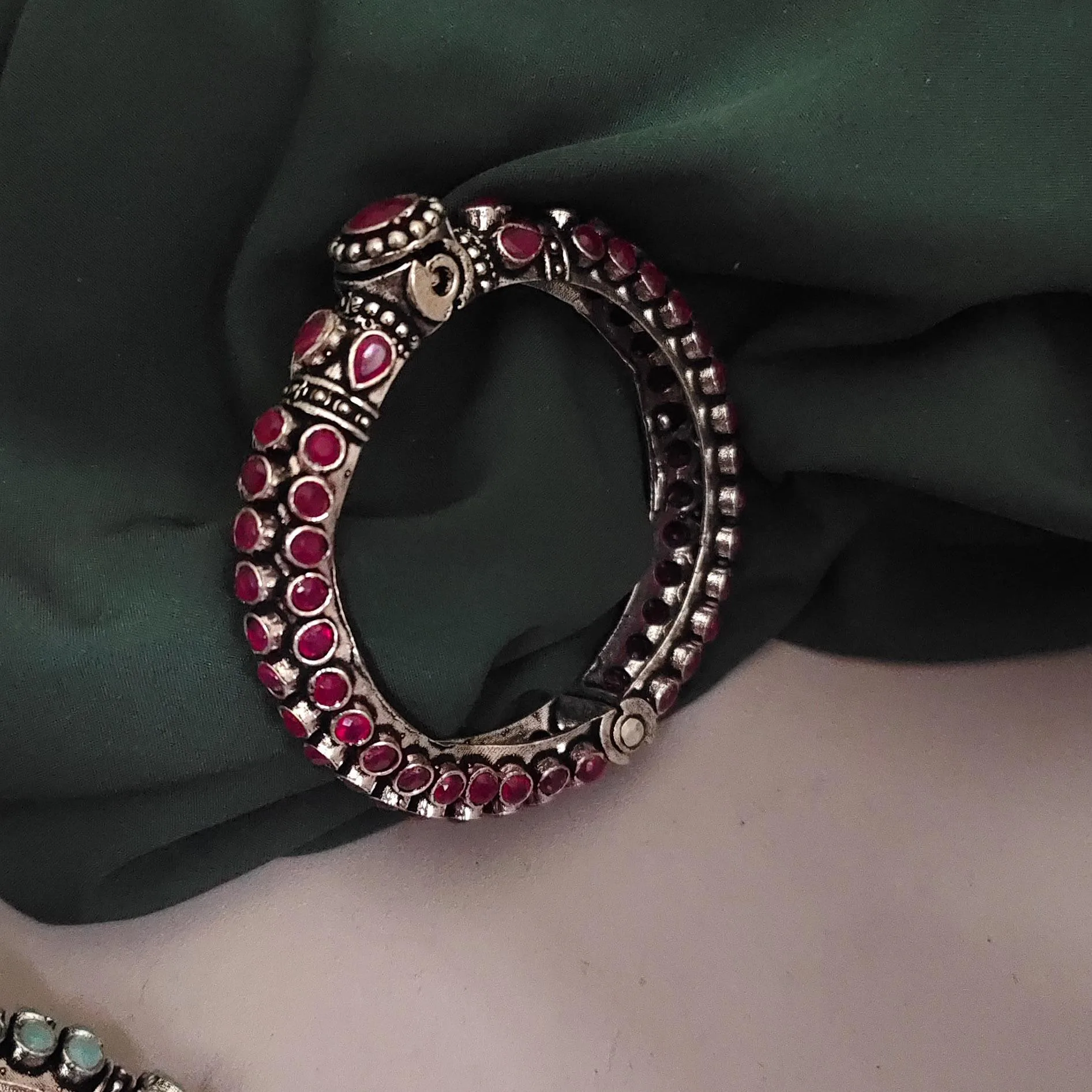
Oxidised bangles and bracelets add a bold, tribal edge to any look. Kadas — thick, open-ended cuff-style bangles — are the standout subcategory, often featuring elephant motifs, geometric tribal patterns, or Rajasthani mirror work.
Stacking 3–5 thin oxidised bangles on one wrist creates a boho-chic look that works equally well with kurtis and denim. Bracelets with adjustable clasps in this finish are particularly popular as they fit all wrist sizes.
-
Half Moon Oxidised Foot Kada Set: Trendy Jewelry For Women
Original price was: ₹2,149.00.₹499.00Current price is: ₹499.00.
-
Red Stone Oxidised Bangles: Affordable Elegance For Women
Price range: ₹599.00 through ₹999.00
-
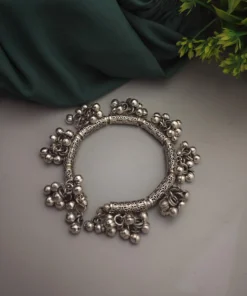
Audacious Ghungroo Bracelet: Adjustable & Trendy
Original price was: ₹1,799.00.₹349.00Current price is: ₹349.00.
-
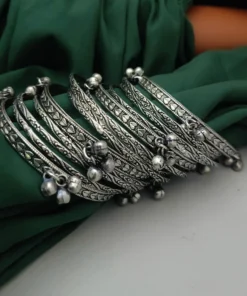
Stunning 16-piece Oxidised Bangles Set
Original price was: ₹3,799.00.₹849.00Current price is: ₹849.00.
Hasli Necklaces
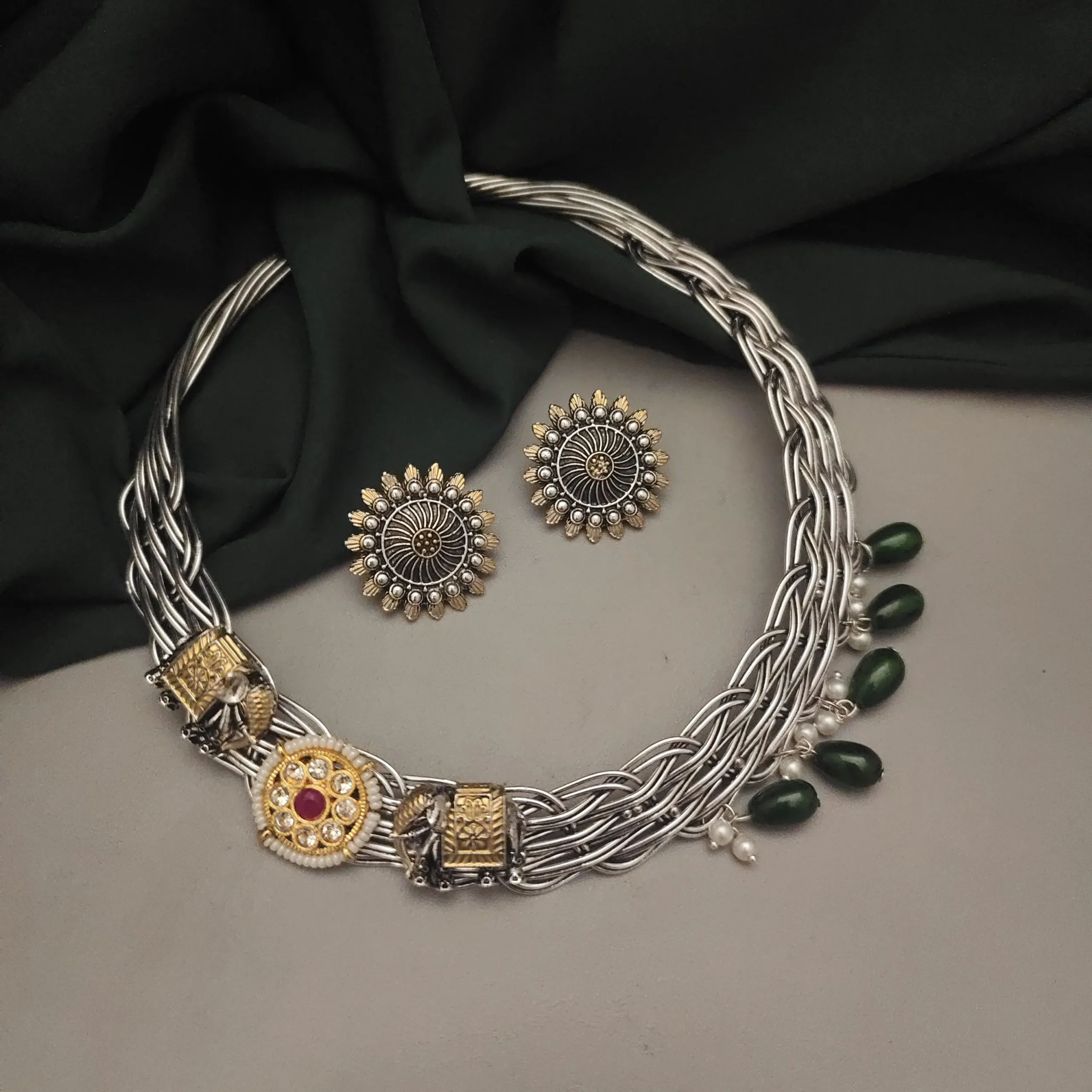
The hasli is a rigid, collar-style necklace that sits snugly around the neck. Oxidised hasli necklaces have surged in popularity due to their clean, structured look that bridges traditional and modern aesthetics.
Unlike flexible necklaces, a hasli maintains its shape and provides a sophisticated, contemporary-meets-traditional silhouette. For a deeper exploration of this jewellery type, read our detailed guide: What is a Hasli Necklace?
-
Elegant Hasli Choker Necklace Set with Elephant Design
Original price was: ₹2,899.00.₹799.00Current price is: ₹799.00.
-
Elegant Premium Stone Hasli Necklace & Earring Set
Original price was: ₹2,149.00.₹749.00Current price is: ₹749.00.
-
Aashvi Trendy 2-tone Oxidised Hasli Set
Original price was: ₹2,899.00.₹749.00Current price is: ₹749.00.
-
Stylish Oxidised Fusion Hasli Set: Trendy Necklace Earrings Combo
Original price was: ₹2,899.00.₹749.00Current price is: ₹749.00.

Combo Sets
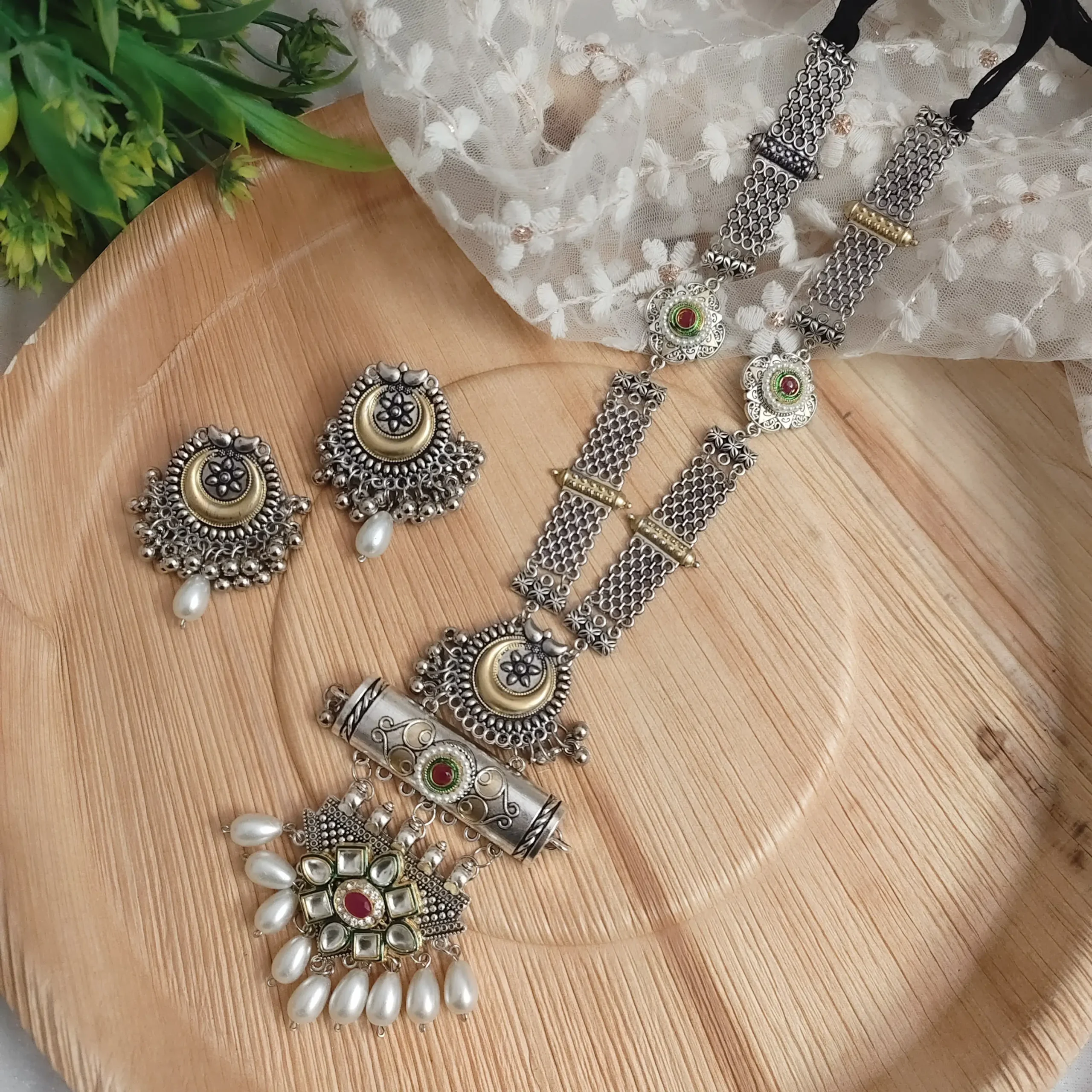
Oxidised combo sets bundle matching pieces — typically a necklace with earrings, or a necklace, earrings, and bangles together. Buying a set ensures visual coherence and typically saves 15–25% compared to purchasing individual pieces. These sets are especially popular as gifts for festivals like Diwali, Raksha Bandhan, and Karwa Chauth.
-
Mayur Chain Necklaceset
Original price was: ₹2,149.00.₹749.00Current price is: ₹749.00.
-
Elegant Hasli Choker Necklace Set with Elephant Design
Original price was: ₹2,899.00.₹799.00Current price is: ₹799.00.
-
Trendy Oxidised Long Fusion Necklace & Earring Set
Original price was: ₹2,349.00.₹749.00Current price is: ₹749.00.
-
Stylish Oxidised Choker Set: Trendy Necklace & Earrings
Original price was: ₹2,349.00.₹749.00Current price is: ₹749.00.
Other Popular Types
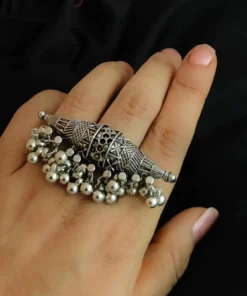
- Rings: Adjustable oxidised rings with floral, peacock, or dome designs — perfect for stacking across multiple fingers.
- Maang Tikka: An oxidised maang tikka adds a regal touch to ethnic outfits without the heaviness of gold pieces.
- Nose Pins: Small nose studs and rings in this finish offer a subtle tribal aesthetic.
- Waist Belts (Kamarband): Oxidised waist belts cinch the waist over sarees and lehengas for a dramatic, royal look.
- Anklets (Payal): Anklets in this darkened finish with ghungroo bells combine sound with style — a favourite for festivals and mehendi ceremonies.
-
Ethnic Oxidised Adjustable Finger Ring - Unique Designs For Women
Original price was: ₹1,799.00.₹349.00Current price is: ₹349.00.
-
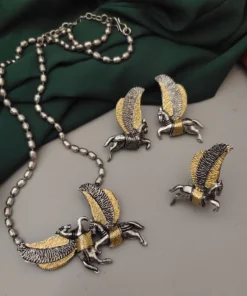
Two Tone Horse Jewelry Set - Stylish Combo
Original price was: ₹2,149.00.₹499.00Current price is: ₹499.00.
-
Adjustable Two-tone Oxidised Finger Ring: Trendy & Stylish Women's Jewelry
Original price was: ₹1,799.00.₹349.00Current price is: ₹349.00.
How to Style Oxidised Jewellery
One of the greatest strengths of oxidised jewellery is its extraordinary versatility. It bridges the gap between ethnic and contemporary fashion, making it one of the few jewellery categories that works across virtually every outfit type. For a comprehensive visual reference, see our Dress and Jewellery Combination Chart. For earring-specific styling ideas, explore our guide on How to Style Oxidised Jewellery Earrings.
Styling with Sarees
Oxidised jewellery with saree pairings have become a signature look in Indian fashion. Here is how to match by fabric:
- Cotton Sarees (Handloom, Khadi, Tant): Pair with a heavy oxidised choker or temple necklace, medium-sized jhumkas, and 2–3 bangles in this finish. The earthiness of cotton and the rustic metalwork complement each other perfectly.
- Silk Sarees (Banarasi, Kanchipuram, Patola): Use these accessories sparingly — a single statement piece like a bold hasli or long necklace works best. Heavy sets can overpower the already-rich silk texture.
- Chiffon and Georgette Sarees: Lightweight oxidised danglers and a delicate pendant chain balance the fluid drape of these fabrics beautifully.
Styling with Kurtis
Oxidised jewellery with kurti is the everyday go-to combination for millions of Indian women. Styling guidelines by kurti type:
- Anarkali Kurtis: Long necklaces (24–30 inches) or multi-layered chains in this style complement the flowing silhouette. Add statement jhumkas for a festive touch.
- A-line Kurtis: Oxidised chokers or collar necklaces with small stud earrings create a clean, balanced look ideal for office or casual outings.
- Straight-cut Kurtis: Medium-length pendant necklaces with matching jhumkas in this finish. This is the classic, fail-safe Indian workwear combination.
Styling with Lehengas
For lehenga styling, this jewellery style works best with cotton, printed, or fusion lehengas rather than heavy bridal ones. A layered oxidised necklace with matching chandbali earrings, bangles, and a maang tikka creates a complete look. For sangeet, mehendi, or haldi functions, these sets provide a bohemian alternative to traditional gold that photographs beautifully.
Pairing with Western Outfits
This is where oxidised jewellery truly breaks boundaries. Pairing ideas:
- Jeans and a Plain Top: A statement necklace in this metalwork style instantly elevates a basic jeans-and-tee combination. Add a stacked ring set for extra impact.
- Dresses (Maxi, Midi, Wrap): A single oxidised cuff bracelet or large hoops in this finish add an Indo-western edge without overwhelming the outfit.
- Blazer Outfits: An oxidised choker worn over a turtleneck with a blazer creates a powerful, fashion-forward look suitable for creative workplaces and events.
For Office and Professional Settings
This jewellery style works well in professional settings when you choose understated pieces. Small oxidised studs, a thin bracelet in this finish, or a minimal pendant are workplace-appropriate and add personality without being distracting. Avoid large jhumkas or heavy necklaces for corporate environments — save those for after-hours events.
Oxidised Jewellery for Different Occasions
Different occasions call for different levels of statement. Here is a guide to choosing the right pieces for every event:
- Weddings (Sangeet, Mehendi, Haldi): Go bold — layered necklaces, large chandbali earrings, statement kadas, maang tikka, and even a kamarband. This jewellery style is ideal for pre-wedding functions where the vibe is festive but not formal.
- Festivals (Diwali, Navratri, Durga Puja, Onam): Medium to heavy oxidised sets pair beautifully with ethnic wear. A necklace-and-jhumka combo set is the perfect festival combination — coordinated and hassle-free.
- Daily Wear: Small oxidised studs, a thin pendant chain, or a single bangle. The goal is subtle personality, not a statement. Daily-wear pieces in this style typically weigh under 15 grams for comfort.
- College: This is the most popular jewellery category among Indian college students due to its affordability and Instagram appeal. Mismatched oxidised rings, a boho cuff, and quirky jhumkas in this finish are campus staples.
- Gifting: Oxidised combo sets priced between ₹299–₹999 make thoughtful, affordable gifts. They look premium, come in a wide variety, and suit every age group from teenagers to grandmothers.
How to Care for and Clean Oxidised Jewellery
Proper oxidised jewellery care can extend the life of your pieces by 3–5 years. This jewellery type requires different care than gold or silver because the darkened finish is a surface treatment, not an inherent property of the metal. Here is a complete care guide:
How to Clean at Home
How to clean oxidised jewellery safely without damaging the finish:
- Dry Cloth Method (Weekly): Wipe with a soft, dry cotton cloth after every wear to remove sweat and oils. This alone prevents 80% of premature darkening.
- Toothbrush Method (Monthly): Use a soft-bristled toothbrush with dry baking soda to gently scrub tarnished areas. Brush only the raised, polished surfaces — avoid the dark recesses.
- Lemon and Salt Dip (Quarterly): For heavily tarnished pieces, dip in a mixture of 1 tablespoon lemon juice + 1 teaspoon salt + warm water for 2–3 minutes. Rinse quickly and dry completely with a cloth.
Storage Tips
- Store each piece in an individual zip-lock bag or soft cloth pouch to prevent air exposure.
- Add a small silica gel packet to your jewellery box to absorb moisture.
- Keep these pieces separate from other metal jewellery to avoid scratching.
- Avoid storing in bathrooms — humidity accelerates tarnishing.
What to Avoid
- Water: Remove these pieces before bathing, swimming, or washing hands. Water is the number one enemy of the oxidised finish.
- Perfume and Deodorant: Apply fragrances before putting on jewellery. Chemical sprays react with the metal and strip the darkened layer.
- Ultrasonic Cleaners: These are designed for gold and diamonds. They will destroy the oxidised finish completely.
- Silver Polish: Silver polishing compounds remove the intentional darkening, defeating the entire purpose of this jewellery style.
Oxidised vs Gold vs Silver — Comparison Table
Choosing between oxidised, gold, and silver jewellery? This comparison table breaks down the key differences across 10 parameters to help you decide:
| Parameter | Oxidised Jewellery | Gold Jewellery | Silver Jewellery |
|---|---|---|---|
| Price Range | ₹99 – ₹2,500 | ₹5,000 – ₹5,00,000+ | ₹500 – ₹15,000 |
| Material | Base metal alloy / silver alloy with oxidised finish | 22K or 18K gold | 925 sterling silver or fine silver |
| Weight | Very light (5–30g) | Medium to heavy (10–100g) | Light to medium (8–50g) |
| Durability | 2–5 years with proper care | Lifetime (does not tarnish) | 10–20 years (tarnishes but restorable) |
| Aesthetic | Vintage, antique, bohemian, tribal | Luxurious, traditional, classic | Elegant, modern, minimalist |
| Best Occasions | Daily wear, festivals, college, casual events | Weddings, formal events, investment | Office wear, parties, everyday elegance |
| Resale Value | None | High (80–90% of market rate) | Low to moderate |
| Maintenance | Low — dry cloth, avoid water | Low — occasional professional polish | Medium — regular anti-tarnish care |
| Variety of Designs | Extremely high — 1000s of designs | High but limited by cost | Moderate |
| Skin Sensitivity | May cause reaction in sensitive skin (nickel content) | Hypoallergenic (high karat) | Generally hypoallergenic |
The verdict: Oxidised jewellery wins on affordability, design variety, and statement value. Gold wins on investment and longevity. Silver occupies the middle ground. Many women maintain all three in their collection for different occasions — and oxidised pieces are often the most-worn due to their versatility and trend appeal.
How to Identify Good Quality Oxidised Jewellery
Not all oxidised jewellery is created equal. Here are 7 markers of quality to check before buying:
- Weight and Feel: Quality pieces have a satisfying weight — not plasticky or hollow. Pick up the piece; if it feels like a toy, skip it.
- Finish Consistency: The oxidised coating should be even across the piece. Patchy dark spots or uneven colour indicate poor-quality chemical treatment.
- Clasp and Closure Quality: Check that hooks, clasps, and adjustable mechanisms work smoothly. Poor clasps are the most common failure point in cheap pieces.
- Surface Detail: High-quality pieces have sharp, well-defined engravings and motifs. Blurry or soft details suggest a low-grade mould was used.
- Nickel-Free Certification: If you have sensitive skin, look for nickel-free or lead-free labelling. Premium oxidised jewellery uses brass or copper bases with silver plating rather than nickel.
- Edge Finishing: Run your finger along the edges. Quality pieces have smooth, filed edges. Rough or sharp edges indicate poor finishing — and they can scratch your skin or snag on fabrics.
- Seller Reputation: Buy from established brands that provide material descriptions, return policies, and customer reviews. For reference, the Bureau of Indian Standards (BIS) sets quality benchmarks for metal jewellery in India. Glamaya provides detailed product specifications, high-resolution images from multiple angles, and genuine customer reviews for every product in this category.
Why Oxidised Jewellery is Trending in 2026
The oxidised jewellery market in India has grown at an estimated 18–22% CAGR over the past five years, driven by a convergence of cultural, economic, and digital factors:
- Affordability in a High-Gold Era: With gold prices crossing ₹85,000 per 10 grams in 2026, this jewellery style offers statement-level aesthetics at 1/100th the cost. This makes it the default choice for students, young professionals, and budget-conscious fashion enthusiasts.
- Instagram and Social Media Influence: Oxidised jewellery is inherently photogenic. The dark, textured finish creates strong visual contrast in photos, making it a favourite among fashion influencers and content creators. Hashtags like #oxidisedjewellery have over 2 million posts on Instagram.
- Vocal for Local Movement: The push to support Indian artisans and handcrafted products has boosted demand for these pieces, which are overwhelmingly made by Indian craftspeople in small workshops across Rajasthan, Gujarat, and Odisha.
- Bollywood and Celebrity Endorsement: Celebrities like Kangana Ranaut, Vidya Balan, and Mithila Palkar have been photographed wearing oxidised jewellery at public events and in films, normalising it as a high-fashion category rather than just affordable accessories.
- Versatility Across Generations: This craft appeals to teenagers buying their first jewellery, working women assembling a professional wardrobe, mothers dressing for festivals, and grandmothers who recognise the traditional tribal aesthetics from their own heritage.
- Sustainability Consciousness: As consumers become more environmentally aware, oxidised jewellery — which does not involve mining precious metals or gemstones at scale — is perceived as a more sustainable alternative to mined gold and diamond jewellery.
Frequently Asked Questions About Oxidised Jewellery
What is oxidised jewellery?
Oxidised jewellery is fashion jewellery made from base metal alloys or silver that has been chemically treated to create a dark, antique-looking patina. The process, called oxidation, darkens the metal surface and highlights engraved details, giving each piece a vintage, handcrafted appearance.
Is oxidised jewellery real silver?
Most oxidised jewellery is made from base metal alloys (zinc, copper, brass) with a silver electroplating layer. However, premium oxidised jewellery can be made from 925 sterling silver. Always check the product description for material details before purchasing.
How to clean oxidised jewellery at home?
Wipe with a soft, dry cloth after each wear. For deeper cleaning, gently scrub with a soft toothbrush dipped in dry baking soda. For heavy tarnish, dip briefly in a lemon juice and salt solution (2–3 minutes), then rinse and dry completely. Never use silver polish or ultrasonic cleaners.
Can I wear oxidised jewellery daily?
Yes. Choose lightweight pieces under 15 grams for daily wear — small studs, thin bangles, or minimal pendant chains. Remove before bathing, exercising, or sleeping to extend the life of the oxidised finish.
Does oxidised jewellery turn skin green?
It can, especially in pieces with high copper content in the base alloy. The green mark is copper carbonate — harmless and temporary. To prevent it, apply a thin layer of clear nail polish on the parts that touch your skin, or choose nickel-free, brass-based pieces.
What is the price range of oxidised jewellery?
Most oxidised jewellery ranges from ₹99 to ₹2,500. Simple studs and rings start at ₹99–₹199. Statement necklaces and combo sets typically cost ₹499–₹1,499. Premium pieces in oxidised silver can go up to ₹3,000–₹5,000.
How to store oxidised jewellery?
Store each piece in an individual zip-lock bag or soft cloth pouch to minimise air exposure. Keep in a cool, dry place away from bathrooms. Adding a silica gel packet to your storage box helps absorb excess moisture and slows tarnishing.
Can oxidised jewellery be worn to weddings?
Absolutely. Oxidised jewellery is perfect for pre-wedding functions like sangeet, mehendi, and haldi. For the main ceremony, heavy sets with necklace, chandbali earrings, maang tikka, and bangles create a stunning traditional look — especially with cotton or printed lehengas and sarees.
What is the difference between oxidised and silver jewellery?
Silver jewellery maintains a bright, shiny finish and is made from sterling silver (92.5% pure silver). Oxidised jewellery has a deliberately darkened, antique finish created through chemical treatment. Silver jewellery costs more, lasts longer, and has resale value, while oxidised jewellery is more affordable, trendier, and available in greater design variety.
Where to buy original oxidised jewellery online in India?
Glamaya is one of India’s leading online destinations for handcrafted oxidised jewellery, offering 1,270+ designs across necklaces, earrings, bangles, rings, and combo sets with free shipping, easy returns, and genuine customer reviews on every product.