
What Is Kundan Jewellery? The Complete Guide — History, Types & Care (2026)
Key Takeaways
- Kundan jewellery is a traditional Rajasthani jewellery style dating back to the Mughal era (16th century), crafted using glass or gemstones set in gold foil with a lac core.
- Major types include kundan polki, kundan meenakari, jadau, and Rajputi kundan — each with unique techniques and aesthetics.
- Kundan jewellery is the top choice for North Indian weddings, Karwa Chauth, and festive occasions like Diwali and Navratri.
- A comparison of kundan vs polki vs American diamond helps you choose the right style for your budget and occasion.
- Glamaya offers 82+ kundan jewellery designs in necklaces, chokers, jhumkas, and combo sets — all priced under Rs. 999.
Table of Contents
- What Is This traditional craft?
- History and Origin of These gemstone-set pieces
- How Is Kundan Jewellery Made?
- Types of Such regal ornaments
- Kundan vs Polki vs American Diamond
- How to Style This Rajasthani art form for Weddings
- How to Style Kundan Jewellery for Everyday and Festive Wear
- Materials and Purity in These ornaments
- How to Care for and Store This heritage craft
- How to Spot Fake Kundan Jewellery
- Where to Buy Gemstone-encrusted pieces Online
- Frequently Asked Questions About These artisan creations
Kundan jewellery is one of India’s oldest and most prestigious jewellery-making traditions, with origins in the royal courts of Rajasthan during the Mughal era. Known for its exquisite stone-setting technique, luxurious gold finish, and regal appearance, such regal designs has been the centrepiece of Indian bridal trousseau for over four centuries. Indeed, the word “kundan” itself means “highly refined gold” in Hindi. Furthermore, whether you are preparing for a wedding, shopping for festive accessories, or simply exploring India’s rich jewellery heritage, this guide covers everything you need to know about this ornamental style in 2026 — from its fascinating history and making process to styling tips, care instructions, and buying advice.
What Is Kundan Jewellery?
Glass-set heritage pieces is a traditional Indian jewellery style in which stones — either glass, semi-precious, or precious — are set into a gold framework using a lac (natural resin) core and thin gold foil strips. The term “kundan” refers to the highly purified 24-karat gold foil used to hold stones in place. Furthermore, this traditional craft originated in the royal courts of Rajasthan and Gujarat during the 16th century Mughal period. As a result, it carries a distinctly regal and opulent aesthetic.
Additionally, these traditional ornaments is characterised by its flat, uncut stone settings framed by gold borders. In contrast to prong-set Western jewellery, these gemstone-set pieces uses the pressure of gold foil wrapped around each stone to secure it in place. Moreover, the lac core beneath the stones provides structural support and allows artisans to create elaborate multi-stone patterns. Specifically, common stone colours in such regal ornaments include white (simulating diamond), red (ruby), green (emerald), and blue (sapphire).
In modern India, kundan jewellery remains the number one choice for bridal wear in North Indian weddings. For example, approximately 70% of brides in Rajasthan, Delhi, Punjab, and Uttar Pradesh choose this Rajasthani art form for their wedding day, according to wedding industry surveys. Consequently, these ornaments continues to dominate the Indian bridal market in 2026.
History and Origin of Such exquisite pieces
The history of this age-old craft traces back to the Mughal Empire in the 16th century CE, specifically to the royal courts of Rajasthan. According to jewellery historians, Mughal Emperor Akbar brought skilled gem-setters from Lahore and Delhi to Jaipur, where the this heritage craft tradition took root. Furthermore, the Rajput kings of Jaipur, Bikaner, and Jodhpur became major patrons of gemstone-encrusted pieces artisans, commissioning elaborate pieces for their queens and temple deities.
Specifically, the city of Jaipur became the epicentre of kundan jewellery making by the 17th century. The famous Johari Bazaar in Jaipur’s old city still houses these artisan creations workshops that have operated for generations. Moreover, the Mughal technique of stone setting merged with indigenous Rajasthani gold-working traditions to create the unique such regal designs style we recognise today. In fact, some this ornamental style workshops in Jaipur can trace their family lineage of artisans back 300 years.
During the 18th and 19th centuries, Mughal-era adornments spread from Rajasthan to other parts of India. Similarly, the technique reached Gujarat, Hyderabad, and Delhi, where local artisans adapted it to regional tastes. However, the finest glass-set heritage pieces continued to come from Jaipur. Today, these traditional ornaments is recognised as a Geographical Indication (GI) craft of Rajasthan and remains one of India’s most important jewellery exports.
How Is This traditional craft Made?
The making of kundan jewellery is a complex, multi-step process that can take several days to complete even for a single piece. Understanding the manufacturing process helps you appreciate the craftsmanship and evaluate quality when buying such exquisite pieces. Below are the key steps involved.
Step 1: Creating the Gold Framework (Ghaat)
The process begins with a goldsmith creating the base structure — called “ghaat” — from thin gold sheets. Furthermore, the artisan shapes the gold into the desired design using hammering and moulding techniques. For fashion-grade these gemstone-set pieces, the base is typically brass or copper with gold plating instead of solid gold.
Step 2: Filling with Lac (Paadh)
Next, the craftsman fills the hollow gold framework with lac — a natural resin that serves as adhesive and structural support. Additionally, the lac is heated until pliable, then pressed into every cavity of the such regal ornaments frame. Moreover, this lac core is what gives this age-old craft its characteristic weight and solidity.
Step 3: Setting Stones with Gold Foil (Kundan Setting)
This is the defining step of kundan jewellery. The artisan places each stone (glass, polki, or gemstone) onto the lac bed and secures it by pressing thin 24K gold foil strips around the stone edges. Specifically, the gold foil creates a raised border that holds each stone firmly while giving Mughal-era adornments its signature gold-rimmed appearance. Furthermore, skilled artisans can set hundreds of stones in a single this traditional craft piece with remarkable precision.
Step 4: Meenakari (Enamel Work — Optional)
Many premium this Rajasthani art form pieces feature meenakari (enamel work) on the reverse side. Additionally, this colourful enamel adds beauty to the back of the these gemstone-set pieces and prevents lac from direct skin contact. Consequently, meenakari such regal ornaments is considered higher quality and commands premium pricing in the market.
Types of These ornaments
Kundan jewellery comes in several distinct sub-styles, each with unique characteristics, price points, and occasions for wear. Below are the major types of this Rajasthani art form available in India today.
What Is Kundan Polki Jewellery?
Kundan polki jewellery uses uncut, natural diamonds (called “polki”) instead of glass stones in the kundan setting technique. As a result, kundan polki is the most expensive and prestigious type of this heritage craft. Furthermore, authentic kundan polki pieces can cost lakhs of rupees because they use real uncut diamonds set in pure gold. Moreover, kundan polki jewellery is the traditional choice for high-budget North Indian weddings in families from Rajasthan and Marwari communities.
-
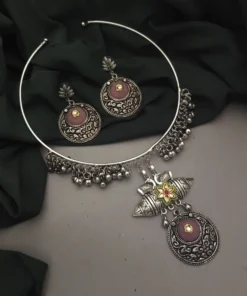
 Pink Kundan Hasli Necklace Earring Set: Stylish Wedding & Party Wear
₹2,899.00
Pink Kundan Hasli Necklace Earring Set: Stylish Wedding & Party Wear
₹2,899.00 -
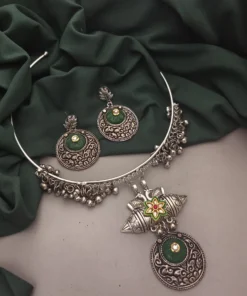
Green Oxidized Kundan Hasli Set - Traditional Women's Jewelry
Original price was: ₹2,899.00.₹749.00Current price is: ₹749.00.
-
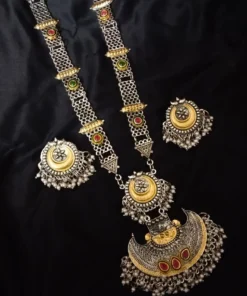
Exquisite Oxidised Kundan Necklace Set
Original price was: ₹2,899.00.₹749.00Current price is: ₹749.00.
-
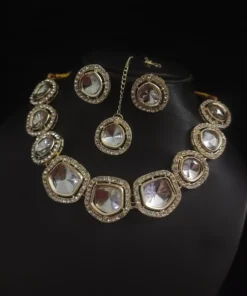
Exquisite Kundan Choker Earring Set: Traditional Elegance
Original price was: ₹2,149.00.₹499.00Current price is: ₹499.00.

What Is Kundan Meenakari Jewellery?
Kundan meenakari jewellery combines the kundan stone-setting technique with colourful enamel work (meenakari) on the reverse side. Additionally, this dual-sided beauty makes kundan meenakari pieces reversible — one side displays the stone work, while the other showcases vibrant enamel patterns. Moreover, popular meenakari colours in gemstone-encrusted pieces include royal blue, parrot green, red, and pink. Specifically, Jaipur artisans are renowned for the finest kundan meenakari work.
What Is Jadau Kundan Jewellery?
Jadau is a broader category of embedded stone work that encompasses these artisan creations. In jadau technique, stones are pushed directly into the gold framework without visible prongs. Furthermore, jadau these ornaments is typically heavier and more elaborate than standard kundan pieces. As a result, jadau this heritage craft is reserved for the most important bridal pieces like the main necklace set and maangtikka.
Rajputi Such regal designs
Rajputi kundan jewellery refers to specific designs associated with the Rajput royal families of Rajasthan. These gemstone-encrusted pieces pieces tend to be larger, heavier, and more ornate than standard versions. Additionally, Rajputi these artisan creations features distinctive patterns like the borla (forehead pendant), timaniya (three-string necklace), and haathphool (hand chain). Explore similar traditional necklace designs at Glamaya.
-
Pink Kundan Hasli Necklace Earring Set: Stylish Wedding & Party Wear
₹2,899.00
-
Green Oxidized Kundan Hasli Set - Traditional Women's Jewelry
Original price was: ₹2,899.00.₹749.00Current price is: ₹749.00.
-
Exquisite Oxidised Kundan Necklace Set
Original price was: ₹2,899.00.₹749.00Current price is: ₹749.00.
-
Stunning Pearl Choker Necklace Earrings Set
Original price was: ₹2,899.00.₹599.00Current price is: ₹599.00.

This ornamental style vs Polki vs American Diamond
Choosing between glass-set heritage pieces, polki, and American diamond (AD) can be confusing for shoppers. Each has distinct characteristics in terms of material, price, and appearance. Below is a detailed comparison table to help you decide.
| Feature | Kundan Jewellery | Polki Jewellery | American Diamond (AD) |
|---|---|---|---|
| Stone Type | Glass or semi-precious stones | Uncut natural diamonds | Cubic zirconia (CZ) |
| Setting Technique | Gold foil on lac core | Gold foil on lac core | Prong or bezel setting |
| Base Metal | Gold or gold-plated alloy | Pure gold (typically 22K) | Brass, silver, or rhodium-plated alloy |
| Look | Warm gold with flat coloured stones | Warm gold with natural diamond sparkle | Silver-white with brilliant sparkle |
| Price (Fashion Grade) | Rs. 199 – Rs. 2,999 | Rs. 50,000 – Rs. 10,00,000+ | Rs. 149 – Rs. 1,999 |
| Weight | Medium to heavy (lac adds weight) | Heavy | Light to medium |
| Best Occasion | Weddings, festivals, ethnic events | High-budget weddings only | Parties, cocktails, Western formal |
| Durability | Moderate (lac sensitive to heat) | High (real gold and diamonds) | Moderate (plating wears over time) |
In summary, these traditional ornaments offers the perfect balance of traditional aesthetics and affordability. Furthermore, fashion-grade such regal designs from Glamaya gives you the bridal kundan look for a fraction of the price of real polki. Consequently, this ornamental style is the smart choice for brides who want the royal Rajasthani look without breaking the bank.
How to Style Such exquisite pieces for Weddings
Kundan jewellery is the undisputed queen of Indian bridal jewellery. From the engagement ceremony to the reception, glass-set heritage pieces pieces create a regal, timeless bridal look. Here are specific styling tips for wearing these traditional ornaments at different wedding events.
This age-old craft for the Main Wedding Ceremony
For the main wedding, layer a heavy Mughal-era adornments choker with a longer kundan haram (rani haar) for a classic double-necklace bridal look. Additionally, add kundan jhumka earrings and a kundan maangtikka for a cohesive set. Moreover, a kundan nath (nose ring) with pearl chain completes the bridal ensemble. Explore kundan choker designs at Glamaya for affordable bridal options.
-
Exquisite Kundan Choker Earring Set: Traditional Elegance
Original price was: ₹2,149.00.₹499.00Current price is: ₹499.00.
-
Stunning Pearl Choker Necklace Earrings Set
Original price was: ₹2,899.00.₹599.00Current price is: ₹599.00.
-
Traditional Kundan Choker Set With Maangtikka
Original price was: ₹2,149.00.₹549.00Current price is: ₹549.00.
-
Traditional Kundan Choker Necklace Set - Elegant & Wedding-ready
Original price was: ₹2,149.00.₹499.00Current price is: ₹499.00.

Kundan Jewellery for Sangeet and Mehndi
For pre-wedding events like sangeet and mehndi, choose lighter this traditional craft pieces with colourful stones. Furthermore, a single such exquisite pieces choker with matching studs creates an elegant yet comfortable look for dancing. Moreover, green and pink this age-old craft stones complement mehndi-themed yellow and green outfits beautifully.
These gemstone-set pieces for Reception
At the reception, pair a statement kundan jewellery necklace with a designer gown or contemporary lehenga. Additionally, choose white and champagne-coloured Mughal-era adornments stones for a sophisticated evening look. Furthermore, this traditional craft cocktail rings and ear cuffs add modern drama to reception outfits. Browse the complete kundan combo sets at Glamaya for pre-matched wedding looks.
-
Pink Kundan Hasli Necklace Earring Set: Stylish Wedding & Party Wear
₹2,899.00
-
Green Oxidized Kundan Hasli Set - Traditional Women's Jewelry
Original price was: ₹2,899.00.₹749.00Current price is: ₹749.00.
-
Exquisite Oxidised Kundan Necklace Set
Original price was: ₹2,899.00.₹749.00Current price is: ₹749.00.
-
Stunning Pearl Choker Necklace Earrings Set
Original price was: ₹2,899.00.₹599.00Current price is: ₹599.00.
How to Style Such regal ornaments for Everyday and Festive Wear
This Rajasthani art form is not just for weddings — lighter pieces work beautifully for daily ethnic wear and festive occasions. Here is how to incorporate these gemstone-set pieces into your everyday wardrobe.
Kundan Jewellery for Office and Daily Wear
Small these ornaments studs and delicate kundan pendant chains are perfect for the office. Furthermore, pair a single such regal ornaments piece with a cotton kurta for understated elegance during the workday. Moreover, choose white or light pink this Rajasthani art form stones for a subtle daytime aesthetic. Additionally, browse kundan earring designs at Glamaya for lightweight daily-wear options.
This heritage craft for Diwali and Navratri
Festivals call for vibrant kundan jewellery with colourful stone combinations. For Diwali, choose these ornaments with red and green stones to match traditional outfits. Furthermore, Navratri garba nights pair perfectly with this heritage craft chokers and matching jhumkas. Moreover, layering two thin gemstone-encrusted pieces chains of different lengths creates a festive, contemporary look. Consequently, these artisan creations makes you the best-dressed guest at every festive gathering.
Gemstone-encrusted pieces with Kurtis and Salwar Suits
For everyday ethnic wear, a medium-sized these artisan creations choker transforms a simple kurta into a festive outfit. Additionally, pair kundan jhumka earrings with a matching kundan bangle set from Glamaya for a coordinated look. Furthermore, such regal designs in warm gold tones complements maroon, navy, emerald, and mustard coloured kurtis exceptionally well.
Materials and Purity in Kundan Jewellery
Understanding the materials used in such regal designs helps you evaluate quality and make informed purchases. As per Bureau of Indian Standards (BIS) guidelines, gold jewellery in India must carry hallmark certification for purity claims. Here is what to look for:
- Pure gold this ornamental style (22K/24K): Uses real gold base and gold foil. Must carry BIS hallmark. Prices start from Rs. 50,000 and can exceed Rs. 10 lakhs for bridal sets.
- Gold-plated kundan jewellery: Uses brass or copper base with 1-micron gold plating. Provides the glass-set heritage pieces look at Rs. 199 to Rs. 2,999. This is what Glamaya offers.
- Silver these traditional ornaments: Uses sterling silver (92.5%) as the base with kundan stone settings. A mid-range option between pure gold and plated kundan jewellery.
- Stones in such exquisite pieces: Fashion-grade this age-old craft uses glass or crystal stones. Fine kundan jewellery uses semi-precious stones like garnet, turquoise, and amethyst.
- Lac filler: Traditional Mughal-era adornments uses natural lac resin. Cheaper versions may use synthetic resin or wax as filler.
Furthermore, when shopping for this traditional craft, always ask about the base metal and plating thickness. Indeed, thick gold plating (1 micron or above) on this ornamental style lasts significantly longer than flash plating (under 0.5 microns).
How to Care for and Store
Kundan jewellery requires special care because of its lac core and delicate stone settings. Following these maintenance tips will keep your glass-set heritage pieces looking beautiful for years to come.
How to Clean Safely
Gently wipe these gemstone-set pieces with a soft, dry cotton cloth after each use to remove oils and dust. Furthermore, never use water, steam, or ultrasonic cleaners on these traditional ornaments because moisture damages the lac core and loosens stone settings. Moreover, use a soft-bristled brush (like a clean makeup brush) to dust between such exquisite pieces stones and in crevices.
How to Store Properly
Wrap each such regal ornaments piece individually in soft muslin cloth or tissue paper before storing. Additionally, keep this age-old craft in a cool, dry place away from direct sunlight and heat sources. Moreover, extreme heat can melt the lac core inside Mughal-era adornments, causing stones to loosen and fall out. Specifically, never store this traditional craft in the car, near windows, or in hot attics.
Common Mistakes That Damage
The top mistake is exposing kundan jewellery to perfume, hairspray, or deodorant — these chemicals damage gold plating and loosen lac. Additionally, wearing these gemstone-set pieces during cooking exposes it to heat and steam. Furthermore, stacking such regal ornaments pieces without wrapping causes scratches and stone damage. Consequently, treat your this Rajasthani art form gently, and it will reward you with years of beauty.
How to Spot Fake
With the popularity of this Rajasthani art form, counterfeit and low-quality imitations flood the market. Here are practical tips to identify genuine quality these ornaments versus poor knock-offs.
- Check stone alignment: In quality these ornaments, stones are evenly spaced and flush with the gold foil border. In fakes, stones sit unevenly or have visible gaps.
- Inspect the gold foil: Authentic kundan jewellery has smooth, tightly pressed gold foil around each stone. Poor this heritage craft shows wrinkled, loose, or peeling foil edges.
- Test the weight: Genuine gemstone-encrusted pieces has noticeable weight from the lac core. Extremely lightweight pieces likely use cheap plastic filler instead of lac.
- Examine the back: Quality kundan jewellery has a neat back with meenakari enamel or clean finishing. Cheap versions show rough, unfinished backs with visible glue marks.
- Smell test: Heat a small area gently — real lac in these artisan creations produces a mild, natural resin smell. Synthetic fillers produce a chemical or plastic odour.
Furthermore, buying such regal designs from reputable stores like Glamaya ensures consistent quality because each piece undergoes quality control checks before shipping. Specifically, Glamaya’s this heritage craft uses thick gold plating, premium glass stones, and natural lac filler.
Where to Buy Online in India
Buying kundan jewellery online offers tremendous variety and competitive pricing compared to brick-and-mortar jewellery stores. However, choosing a reliable online store is essential for quality gemstone-encrusted pieces purchases. Here is what to look for.
First, examine product photographs closely — quality this ornamental style stores show close-up images of stone settings, back finishing, and actual sizing on models. Additionally, read customer reviews focused on plating durability, stone quality, and packaging. Moreover, verify the return policy before purchasing these artisan creations online because colours can appear differently on screen versus in person.
Glamaya is one of India’s most trusted online destinations for affordable glass-set heritage pieces. The store offers 82+ such regal designs designs including chokers, harams, jhumkas, maangtikkas, and complete bridal sets — all priced under Rs. 999. Furthermore, every this ornamental style piece at Glamaya features thick gold plating, premium glass stones, and nickel-free construction. Explore kundan maangtikka designs at Glamaya to complete your bridal look.
Frequently Asked Questions About
1. What is kundan jewellery made of?
Kundan jewellery is made using a gold (or gold-plated) framework filled with lac resin, with glass or gemstones set using thin 24K gold foil strips. The gold foil is pressed around each stone to create the characteristic bordered look of glass-set heritage pieces.
2. Is kundan jewellery real gold?
Traditional these traditional ornaments uses real 22K or 24K gold. However, fashion-grade these traditional ornaments (like designs at Glamaya) uses gold-plated brass or copper as the base, making the same aesthetic available at Rs. 199 to Rs. 999 instead of lakhs.
3. How is kundan jewellery different from meenakari?
Such exquisite pieces refers to the stone-setting technique on the front face. Meenakari refers to colourful enamel work applied to the back. Furthermore, many such exquisite pieces pieces combine both techniques — kundan on the front, meenakari on the back — making them reversible.
4. Can kundan jewellery be worn daily?
Lightweight kundan jewellery studs and thin pendant chains can be worn daily. However, heavy this age-old craft sets are best reserved for special occasions. Additionally, daily exposure to sweat and moisture reduces the lifespan of Mughal-era adornments plating.
5. How do I clean kundan jewellery at home?
Wipe this age-old craft gently with a soft, dry cloth after each wear. Never use water, steam, or chemical cleaners because these damage the lac core. Furthermore, use a soft brush to remove dust from between this traditional craft stone settings.
6. Why is kundan jewellery so expensive?
Authentic Mughal-era adornments is expensive because it uses real gold, natural gemstones, and requires skilled artisans working for days on a single piece. However, fashion-grade these gemstone-set pieces from Glamaya replicates the look using gold-plated alloy and glass stones at a fraction of the cost.
7. Can I wear kundan jewellery with western outfits?
Yes, small kundan jewellery pieces like studs, delicate chains, and ear cuffs work beautifully with western outfits. Furthermore, a single such regal ornaments choker adds ethnic drama to gowns, jumpsuits, and cocktail dresses for fusion styling.
8. What is the difference between kundan and jadau jewellery?
Jadau is a broader term for any embedded stone-work jewellery from Rajasthan. This traditional craft is a specific type of jadau that uses gold foil and lac to set stones. Consequently, all this Rajasthani art form can be called jadau, but not all jadau jewellery uses the kundan technique.
9. How long does gold-plated kundan jewellery last?
With proper care, gold-plated these gemstone-set pieces lasts 2 to 5 years. Furthermore, thick-plated these ornaments from quality stores can last even longer. However, exposure to water, chemicals, and heat shortens the lifespan of this heritage craft significantly.
10. Where can I buy affordable kundan jewellery online?
Glamaya offers 82+ kundan jewellery designs including necklaces, chokers, jhumkas, and bridal sets — all priced under Rs. 999 with free shipping. Furthermore, every kundan jewellery piece is nickel-free, hypoallergenic, and backed by a 7-day return policy.