
How to Style a Hasli Necklace for Modern & Traditional Looks
May
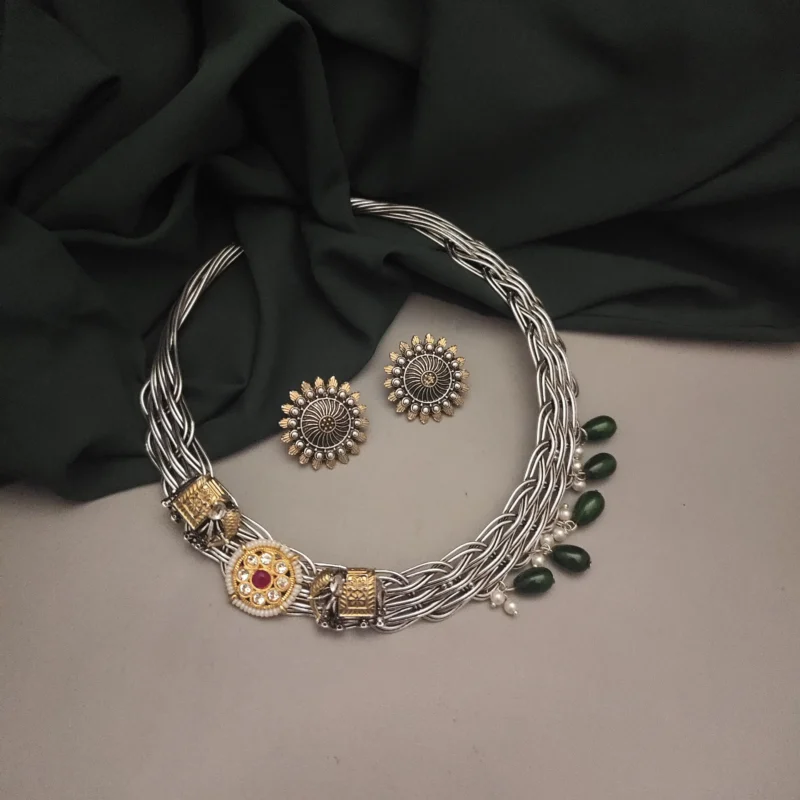
The Hasli necklace, a timeless piece of jewelry, seamlessly blends traditional craftsmanship with contemporary fashion. Originating from various parts of India, especially Rajasthan, Gujarat, and Maharashtra, the Hasli is known for its rigid, collar-like design that gracefully adorns the neck.
Understanding the Hasli Necklace
Traditionally crafted from metals like silver or gold, the Hasli necklace features a circular or semi-circular shape. Its minimalist yet bold appearance makes it a versatile accessory suitable for various occasions.
Styling the Hasli Necklace with Traditional Attire
When paired with traditional outfits, the Hasli necklace enhances the overall look:
- Sarees: A gold or silver Hasli complements silk sarees, adding a touch of elegance.
- Lehengas: Embellished Haslis with gemstones can elevate bridal or festive lehengas.
- Salwar Kameez: A simple Hasli can add sophistication to everyday ethnic wear.
Incorporating the Hasli Necklace into Modern Fashion
The Hasli necklace isn’t limited to traditional wear; it can be styled with modern outfits too:
- Western Dresses: A sleek Hasli can serve as a statement piece over a plain dress.
- Casual Wear: Pairing a Hasli with a t-shirt and jeans adds a boho-chic vibe.
- Office Attire: A minimalist Hasli can subtly enhance formal outfits.
Choosing the Right Hasli Necklace
When selecting a Hasli necklace, consider the following:
- Material: Opt for metals that suit your skin tone and occasion.
- Design: Choose between plain, engraved, or gemstone-studded designs based on your style.
- Size: Ensure the necklace fits comfortably around your neck.
Maintaining Your Hasli Necklace
To keep your Hasli necklace in pristine condition:
- Store it in a dry place away from moisture.
- Clean it regularly with a soft cloth.
- Avoid contact with perfumes or chemicals.
FAQs About Hasli Necklaces
- What is a Hasli necklace?
A Hasli necklace is a traditional Indian jewelry piece characterized by its rigid, collar-like design, typically made from metals like silver or gold. - Can I wear a Hasli necklace with western outfits?
Yes, the Hasli necklace’s versatile design allows it to be paired with both traditional and modern attire. - How do I choose the right Hasli necklace for me?
Consider factors like material, design, and size to select a Hasli that complements your style and comfort. - Where can I buy authentic Hasli necklaces online?
Authentic Hasli necklaces are available on platforms like Amazon India, Etsy, and specialized jewelry stores. - How should I care for my Hasli necklace?
Store it properly, clean it regularly, and avoid exposure to chemicals to maintain its shine and durability.
Latest Hasli Designs 2026 — What Is Trending Now
Minimalist Haslis
The biggest trend in 2026 is the minimalist hasli necklace — slim, clean-line metal bands with subtle texture or a single accent stone. These pieces work with Western blazers, linen kurtas, and even athleisure. The appeal is in their sculptural quality — a slim oxidised silver band around the neck looks like wearable art. Minimalist haslis are also the most comfortable for all-day wear because of their lighter weight.
Statement Haslis
On the other end of the spectrum, bold statement haslis with intricate filigree, stone clusters, and multi-layered construction are dominating festive and wedding jewellery. These wide-band pieces (4+ cm) function as the sole neckpiece — you do not need a secondary necklace when wearing a statement hasli. Pair with a deep-neck blouse and let the hasli command attention.
Fusion Haslis
Fusion designs combine the rigid hasli structure with elements from other jewellery traditions — pendant drops hanging from a hasli base, pearl clusters embedded in oxidised metal, or a rigid band that transitions into flexible chain at the ends. These hybrid designs appeal to women who want the hasli silhouette but with softer, more versatile aesthetics. A fusion hasli with a choker-style closure is particularly popular.
Regional Hasli Styles Across India
Rajasthani Hasli
Bold and unapologetically dramatic. Rajasthani haslis feature wide silver or oxidised bands with mirror work, tribal motifs, and geometric engravings. The traditional Rajasthani hasli was a symbol of married status among Rajput women. Today, these designs are prized for their artistic impact with Bandhani sarees, lehengas, and boho fusion outfits.
Kolhapuri Style (Maharashtra)
The Kolhapuri thushi is a tightly coiled, rope-like gold or oxidised collar. It sits close to the throat and is traditionally part of the Maharashtrian Nauvari saree ensemble. Modern versions in oxidised silver capture the same snug, elegant silhouette at accessible prices. If you have a slender neck, the Kolhapuri style is exceptionally flattering.
Marathi Hasli
Distinct from the Kolhapuri, the Marathi hasli is a broader, flatter collar — often featuring peacock or lotus motifs that are central to Maharashtrian jewellery iconography. These pieces are worn for festivals like Ganesh Chaturthi and traditional family celebrations.
South Indian Hasli
Temple-style haslis from Tamil Nadu and Karnataka incorporate deity motifs, mango shapes, and rice-grain patterns into the rigid collar form. Gold-plated versions are part of Bharatanatyam dance jewellery. Oxidised reproductions bring this heritage design into daily and festive wear.
Hasli for Different Occasions
Weddings and Festive Events
Choose an ornate gold-plated or kundan-style hasli with matching necklace elements. A statement hasli replaces the need for a choker-plus-necklace combination — it provides both the structure and the drama in one piece. Pair with chandelier earrings and heavy bangles for a complete bridal or festive look.
Office and Professional Settings
A slim, unadorned oxidised silver or matte-finish hasli adds sophisticated structure to formal outfits. Wear it over a turtleneck or with a collared shirt (visible above the top button). The rigid silhouette reads as polished and intentional in professional contexts.
Casual and Everyday Wear
Lightweight oxidised haslis in simple designs — smooth bands, twist patterns, or minimal engravings — work with t-shirts, kurtas, and dresses. The hasli elevates a basic outfit instantly because its structured form creates a focal point that loose chains cannot match.
College and Campus
Tribal and boho haslis are a campus staple. They pair with kurti-jeans combos, denim jackets, and cotton dresses. Budget-friendly oxidised options mean you can own several styles without breaking a student budget.
How to Choose Hasli Size for Your Neck
Proper sizing is critical for haslis because, unlike flexible necklaces, a rigid band cannot adjust to your neck. Here is how to get it right.
Step 1: Measure. Wrap a soft measuring tape around the base of your neck where the hasli will sit. Note the measurement in centimetres.
Step 2: Add comfort. Add 1 to 1.5 cm to your measurement. You should be able to slide one finger comfortably between the hasli and your skin.
Step 3: Know standard sizes. Haslis typically come in inner circumferences of 36 to 46 cm (or inner diameters of roughly 12 to 15 cm). Slender necks usually need 36–40 cm, average necks 40–43 cm, and broader necks 43–46 cm.
Step 4: Consider width. Wider haslis (3 cm+) suit longer necks. Narrow haslis (1–2 cm) are universally flattering. If you have a shorter neck, avoid wide bands that visually compress your neckline — a slim hasli elongates instead.
When between sizes: Always size up. A slightly loose hasli rests elegantly on the collarbone. A tight hasli digs in and looks uncomfortable.